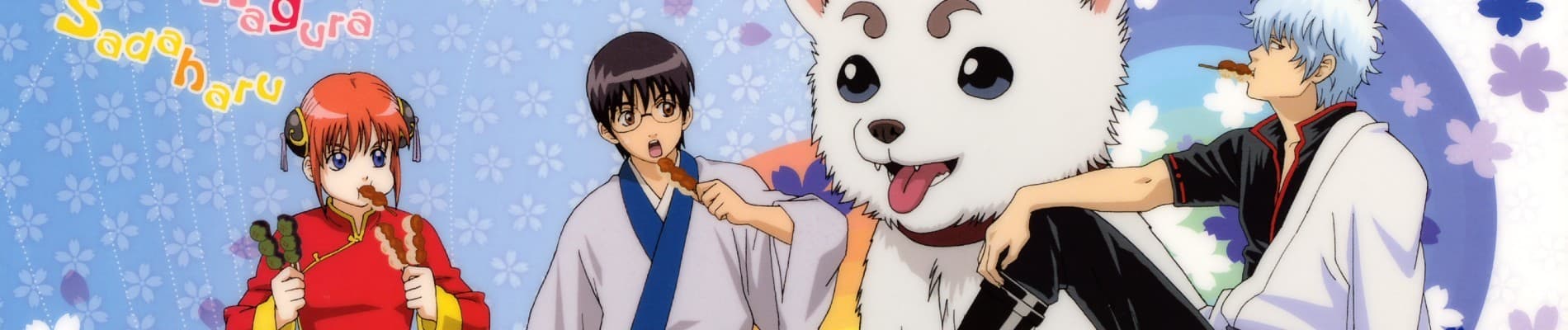
Gintama
a review by NordySandwich
a review by NordySandwich
When I first started Gintama, I genuinely thought I’d made a mistake.
The opening episodes felt chaotic, random, almost aggressively unserious. Characters broke the fourth wall before I even learned their names. Jokes flew past me at machine-gun speed. There were references I didn’t understand, parodies of things I hadn’t watched yet, and punchlines that arrived without warning. I remember thinking, Is this supposed to make sense?
But somewhere between the stupidity, the screaming, and the wooden sword swinging around like it was Excalibur on a budget, something clicked.
And once it clicked, there was no going back.
The World That Shouldn’t Work — But Does
The premise of Gintama is absurd: Edo-era Japan invaded by aliens called Amanto. Samurai are banned from carrying swords. Technology and tradition clash in ridiculous ways. You’ll see kimono-wearing citizens standing next to vending machines and spaceships like it’s just another Tuesday.
At first, I didn’t take this world seriously. It felt like a parody sandbox where anything could happen because nothing mattered.
But that’s the trick.
The randomness isn’t laziness — it’s freedom. The setting allows the story to pivot between slapstick comedy and emotional devastation without feeling forced. One episode can be about a toilet paper crisis, and the next can punch me in the chest with themes of loyalty, grief, and sacrifice.
I’ve watched a lot of anime, but very few shows feel this alive. Edo in Gintama feels messy, loud, human. It feels inhabited.
Gintoki — The Lazy Samurai Who Ruined Me
At the center of everything is Gintoki Sakata.
When I met him, I thought he was a joke character. White hair, dead fish eyes, addicted to sweets, constantly broke, allergic to responsibility. He reads manga during fights. He complains more than he acts.
He is not what you expect from a “main character.”
And yet, the more I watched, the more I realized he might be one of the most layered protagonists I’ve ever seen.
Gintoki isn’t lazy because he lacks ability. He’s lazy because he’s tired. He’s a war survivor in a world that moved on without him. Beneath the sarcasm and stupidity is a man carrying invisible scars.
When Gintoki gets serious, the tone of the entire show shifts. The music lowers. The jokes stop. His eyes sharpen. And suddenly, the man who trips over his own stupidity becomes terrifyingly capable.
There’s something deeply powerful about that contrast. It made me appreciate him more than any constantly-serious hero ever could. Gintoki feels human — flawed, stubborn, grieving, loyal.
Watching him protect the people he cares about, not because he wants glory but because he refuses to lose anyone else, hit harder than I expected.
The Yorozuya — Found Family Done Right
The heart of the show isn’t just Gintoki — it’s the Yorozuya.
Kagura is chaotic energy in human form. Loud, blunt, childish, yet surprisingly wise at times. Her alien strength is played for laughs constantly, but her loneliness and past are never ignored.
Shinpachi Shimura starts off feeling like “the normal one.” Just a guy with glasses trying to survive the insanity. But over time, I realized he’s the emotional anchor. His loyalty to Gintoki isn’t blind — it’s chosen.
What I love most is that this isn’t some idealized found family. They argue. They’re broke. They insult each other constantly. But when it matters, they stand together without hesitation.
Their bond feels earned. Not declared — built.
The Comedy That Broke Me
I’ve laughed at anime before.
But Gintama made me pause episodes because I couldn’t breathe.
The humor is shameless. Toilet jokes. Meta jokes. Industry jokes. Long build-ups for stupid punchlines. Random cutaways. Characters arguing with the narrator. Entire episodes built around one absurd premise.
It shouldn’t work this consistently.
There were moments I questioned the writers’ sanity — and then five minutes later I’d be crying from laughter. The show weaponizes unpredictability. It refuses to follow conventional timing.
And yet, it never feels desperate.
It feels confident.
Confident enough to make a parody episode about serious shounen tropes — and then turn around and execute those same tropes better than most battle anime.
When the Tone Shifts — And It Hits Like a Truck
The first time Gintama went fully serious, I wasn’t prepared.
The music changed. The pacing slowed. Characters who were punchlines suddenly became warriors. The stakes felt real.
And that’s when I realized the comedy wasn’t there to distract me.
It was there to make the pain worse.
Because I’d grown attached. I cared about these idiots. I’d laughed with them for dozens of episodes. So when danger arrived, it felt personal.
Characters like Takasugi Shinsuke aren’t just villains — they’re broken reflections of Gintoki. The history between them adds emotional weight to every confrontation. It’s not just swords clashing. It’s ideals, regret, and unresolved grief colliding.
The serious arcs don’t abandon humor entirely — they just sharpen it into something quieter. More controlled.
And when fights happen, they feel earned. Not flashy for the sake of spectacle, but emotionally charged.
Side Characters That Feel Like Main Characters
One of the most shocking things about Gintama is how much love it gives its side cast.
The Shinsengumi aren’t just comic relief police officers. They’re layered, competitive, tragic, and loyal in their own dysfunctional way.
Characters who start as one-note jokes eventually reveal depth that blindsides you. The show takes its time. Sometimes dozens of episodes pass before someone’s backstory surfaces.
But when it does, it reframes everything.
I found myself caring about characters I once dismissed. That rarely happens for me in long-running series.
The Pacing — Yes, It’s Slow (And That’s Okay)
I won’t lie: Gintama demands patience.
If someone asked me whether the first 20 episodes are a masterpiece, I’d say no. It’s messy. It’s finding its rhythm. The jokes are more hit-or-miss early on.
But once the show settles into itself, the consistency becomes almost unbelievable.
It’s not a binge-friendly adrenaline rush like some battle anime. It’s a long relationship. You grow with it. You learn its humor. It teaches you how to watch it.
And by the time the major arcs hit, you’re invested in ways you didn’t expect.
The Themes I Didn’t Expect
Underneath the absurdity, Gintama is about:
Moving forward after loss
Holding onto your values in a changing world
Choosing your family
Protecting what little peace you’ve built
Gintoki’s generation fought a war they lost. The world modernized without them. Swords were banned. Samurai became relics.
And yet, the show never romanticizes the past blindly. It questions what it means to hold onto tradition versus adapting.
That thematic depth surprised me more than anything.
The Ending — Saying Goodbye
Finishing Gintama felt strange.
This wasn’t just another anime crossed off a list. It felt like leaving behind people I’d spent years with. Inside jokes. Running gags. Emotional scars. Growth.
Few series manage to feel both ridiculous and meaningful at the same time.
Gintama does that effortlessly.
When it ended, I didn’t just feel satisfied. I felt grateful.
Why It Became One of My Favorites
I’ve watched critically acclaimed anime. Beautifully animated masterpieces. Perfectly structured stories.
But Gintama is different.
It’s messy and brilliant. Stupid and profound. Loud and quietly heartbreaking.
It feels human.
And I think that’s why it stayed with me.
Not because every arc was perfect. Not because every joke landed. But because at its core, it understood something simple:
Life is absurd. Painful. Hilarious. Meaningful. And often all at once.
Gintama doesn’t choose between comedy and tragedy.
It embraces both.
Final Thoughts
If someone asks me whether they should watch Gintama, I don’t immediately say yes.
I ask them if they’re patient.
If they’re willing to sit through nonsense until that nonsense becomes comfort.
If they’re okay with laughing one episode and feeling emotionally attacked the next.
Because Gintama isn’t just an anime you consume.
It’s one you live with.
And for me, living with it was unforgettable.
40.5 out of 43 users liked this review
