Rurouni Kenshin
a review by NapoJ
a review by NapoJ
La siguiente reseña está en Español e Inglés (traducida con el apoyo de DeepL)
La versión leída es la traducción al Español por Tornado
Tengo nostalgia por el anime de Rurouni Kenshin, hace casi una década que lo veía por primera vez y desde entonces escuchar sus fantásticos Openings y Endings vuelcan mi corazón. Usualmente leía el comentario de cómo debía de tener un remake para “darle justicia” a su último arco, “Jinchu”; y reconociendo que la adaptación del “Arco de Kyoto” es uno de mis arcos preferidos de todos los tiempos, sabía que eventualmente debía de leerlo, debía de cerrar este pendiente.
Pese a que mi nostalgia es reciente, Rurouni Kenshin genera un profundo recuerdo en mi generación dada su emisión con el título de “Samurai X”. Y tenía con que conseguirlo, imposible no lograr interés teniendo samurais en emocionantes peleas con katanas, al crecer es cuándo vas comprendiendo lo interesante del marco contextual en el que se desarrolla la obra.
El Bakumatsu, ese turbulento período de transición que involucró el fin del Shogunato de Tokugawa, la apertura al extranjero, las guerras Boshin, siendo un período que demarco el otoño de la existencia y filosofía samurai. Kenshin es posterior a esta época, vivió y fue protagonista de su parte más cruenta, sin embargo, su narrativa es al mundo posterior del momento histórico, en el cuál las estructuras resultantes están en el proceso de cumplir los ideales por los que lucharon, para construir el país que imaginaban.

Kenshin detrás de su representación básica de vagabundo justiciero, tiene numerosas capas que conforman su dimensionalidad, sean que pese a ser perseguido por el gobierno por ser un “factor incómodo”, protege la institucional no por las personas que le conforman sino porque representa estabilidad y promesa de cambio, es quien cree en la justicia y perdón pese a ser incapaz de perdonarse a sí mismo, un asesino que trata la katana como un arma y las escuelas de formas de asesinar, y aún así defiende un estilo de defensa, usando una Katana sin filo.
Los personajes principales de la serie siguen este esquema de ser una conformación de dilemas entre el pasado cruento y su perspectiva actual, una constante comparación entre formas de vivir, especialmente con la observación sobre dejar atrás el pasado, no olvidando, es recordar sin caer en lo obsesivo. A nivel de narrativa los puntos más álgidos precisamente se presentan cuando las diferentes perspectivas chocan física y argumentalmente, de ahí que el arco de Kyoto sea tan ensalzado, en el Shishio vs Kenshin se presenta esa colisión entre formas de recordar, vivir y construir el país resultante.
Así hay varios personajes que bien podía dedicarles su(s) párrafo(s) de alabanza, de lo perfectamente que se amoldan a este marco de caracterización, Aoshi empeñado en revivir las viejas glorias en honor a sus compañeros, Saito quien utiliza el pasado como el motor de sus acciones, Sanosuke que lo trata de lección para decidir su camino o los mismos antagonistas presos de la obsesión. Incluso pequeños villanos de turno pueden resultar lo suficientemente fascinantes, que aún si no están atados a este arquetipo de narrativa, quedan en tu recuerdo por lo especialmente particulares que llegan a ser.

Ni tampoco es una serie ciega en la defensa de la institucional y lo establecido por el bien de serlo, numerosas veces se presenta como la injusticia, corrupción y corrompimiento sucede en la nueva era. Señalando que se debe estar vigilante en quienes están en el poder para que cumplan lo luchado y prometido.
La serie se conforma por 4 arcos principales: Tokyo, Kyoto, Remembranzas y Jinchuu. En los dos primeros es donde más destaca en cuánto a lo mencionado referente a personajes, su representación, y cómo se vincula temáticamente entre sí. En cambio, Remembranzas y Jinchuu funcionan de espejo, se concentra la parte más importante de su narrativa, donde debería de llegar a término la evolución de Kenshin tras el paso de Kyoto, una demostración de lo aleccionado.
Y aquí también es donde se concentra su parte más endeble, siendo específicos en su arco final, Jinchuu. Porque “Remembranzas” desprovisto de la actitud pacifista de Kenshin, y puesto en el período más álgido del conflicto, es una historia dentro de la misma historia, con un tono más maduro, sangriento y fatalista. A su vez concentra lo que venía siendo la sección más bella de la narración hasta el momento, y la que sería ajusticiada en el arco posterior. De pequeña observación gratuita, habiendo repetido las Ovas del año pasado, afirmó con seguridad que son una adaptación asombrosa, las recomiendo enormemente.

Jinchuu no me termina de convencer por diferentes factores, sí bien como antagonista tiene un objetivo muy diferente a Shishio, aún así no le puede hacer frente en interés ni personalidad. Repite más de lo que debería la idea de vasallos contrarios que dividan la acción en diferentes lugares para ocupar al elenco, sólo siendo Yahiko quien crece de estos encuentros, y su giro principal es previsible, sin traer algo de igual interés frente a la otra posibilidad.
Especialmente el más afectado es el mismo Kenshin, porque un dilema no se termina de conformar como debería, su relación con Kaoru. Debería de ser la columna que sea la conexión entre ambos arcos y al carecer de consistencia, ejerce un golpe directo a la pretensión narrativa. Siendo todavía más específico, Kaoru carece de esas alabanzas que he dedicado a los demás personajes secundarios, pese a que tiene un pasado trágico relacionado a la intención narrativa, es resuelto pronto, sin réplica en el futuro, lo cual anula su conformación y potencial como personaje. Su faceta de maestra también se reduce a momentos muy específicos, y son más guiados para brindar fortaleza a Yahiko.
Aún teniendo lógica y correspondiendo a la visión narrativa de los venideros sucesos, y el estado final, podría haber sido ampliamente mejor considerando los elementos a su disposición. No es únicamente culpa de su arco final, son errores consecutivos que se fueron acumulando hasta llegar al punto en que cuando era importante, ya era tarde para su visión narrativa.

Las batallas también están en ese intermedio de genialidad y pulido, a destacar el ritmo de paneles, su detalle, la variedad de enemigos y formas de luchas, los factores estratégicos según tengan cabida, y la evolución del grupo principal, incorporando técnicas y movimientos que fueron mejorando e incluyendo en su repertorio. Sólo hacía falta una mejora y es el mismo esquema, pese a la variedad en los diferentes estilos y movimientos, usualmente podemos asegurar cómo se va a desarrollar no por ser parte estratégica del protagonista, sino porque se notan las suturas necesarias para conseguir la victoria sean en un movimiento secreto, un regreso inesperado, o la aplicación de una técnica ya vista.
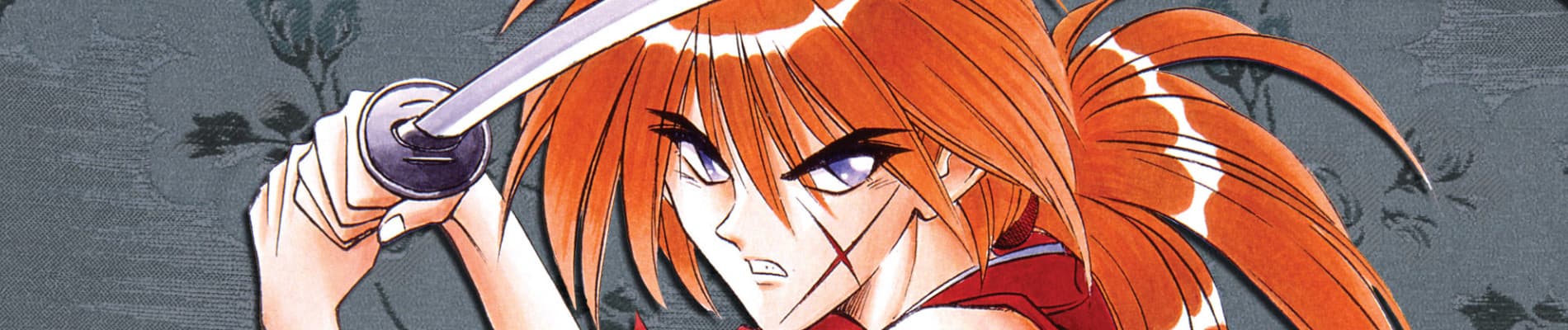
Es notable la evolución artística, los trazos se van suavizando y son más precisos, consiguiendo al final ese aspecto asociado a la obra. En las batallas está el perfecto balance de detalle, sin faltar/saturar, y siendo una acción entendible, espectacular, sobre todo en página o doble página. El diseño de los personajes también es una genialidad, sean personajes históricos u originales, se consigue que representen fielmente su personalidad. Y también tienen expresiones graciosas en los momentos cómicos, y me es imposible no apreciar esos pequeños instantes. También admiro mucho las portadas cuyo estilo está en el intermedio entre ukiyo-e y un estilo visual de trazos tradicionalmente asociados a la visión artística japonesa
La evolución de la aproximación de los paneles es igual de notable, la acción va mejorando en ritmo y enfoque, en simbolismo son contados los ejemplos que se me ocurren, especialmente concentrados en ese contraste entre el protagonista y los diferentes antagonistas. Como también sus fondos, estos teniendo más importancia en el arco de Kyoto, habiendo una mezcla entre el Japón feudal y el que se abría a la modernidad.

Rurouni Kenshin si tiene elementos para dedicar un análisis largo y tendido, al despojarnos del pudor en no adelantar los sucesos podríamos inmiscuirnos en el entramado de cada personaje y sus diferentes visiones del pasado y el futuro, en su estructura que divide precisamente los arcos para la conformación de su mensaje, y esa posición acerca de creer en que el futuro se consigue a través del esfuerzo en el presente y recuerdo del pasado.
Más no termina de comulgar con todo su potencial porque ese vínculo principal es inconsistente, el diálogo entre remembranzas y Jinchuu no llega a término porque su núcleo está incompleto, y nos quedamos con una lección que sí bien es lógica no ha sido conseguida a plenitud.
Leer el manga ha confirmado una de mis máximas opiniones al respecto como que el “Arco de Kyoto” en su primera versión animada se mantiene como mi preferido, me ha descubierto la excelsa brillantez de “Remebranzas” a la que considero la mejor versión de Rurouni Kenshin hasta la fecha, y consigue la satisfacción en que pude haber leído el final del que fuera ese pendiente que recordaba cada vez al escuchar las tonadas de “It’s gonna Rain” o “Heart of Sword”: La conclusión del pacífico vagabundo.

English
I feel nostalgic about the Rurouni Kenshin anime; it’s been almost a decade since I first watched it, and ever since, listening to its fantastic openings and endings stirs my heart. I would often read comments about how it deserved a remake to “do justice” to its final arc, “Jinchu”; and recognizing that the “Kyoto Arc” adaptation is one of my favorite arcs of all time, I knew that eventually I had to read it—I had to close this lingering debt.
Even though my nostalgia is relatively recent, Rurouni Kenshin evokes a deep memory in my generation due to its broadcast under the title “Samurai X.” And it certainly had what it needed to capture attention—it’s hard not to be interested when you have samurai in thrilling katana battles. As you grow older, however, you begin to understand how interesting the contextual framework of the work truly is.
The Bakumatsu—that turbulent transitional period that involved the end of the Tokugawa Shogunate, the opening to foreign influence, and the Boshin Wars—marked the twilight of the samurai’s existence and philosophy. Kenshin takes place after this era; he lived through and was a protagonist in its most brutal moments. However, its narrative unfolds in the world that followed that historical moment, where the resulting structures are in the process of fulfilling the ideals people fought for—to build the country they envisioned.

Behind his basic portrayal as a wandering do-gooder, Kenshin possesses numerous layers that shape his dimensionality: though pursued by the government for being an “inconvenient factor,” he protects the institutions—not for the people who compose them, but because they represent stability and the promise of change. He is someone who believes in justice and forgiveness despite being incapable of forgiving himself; an assassin who understands the katana as a weapon and sword schools as methods of killing, and yet defends a style of protection—using a reverse-blade sword.
The main characters in the series follow this same pattern of embodying dilemmas between a violent past and their present perspective. There is a constant comparison between ways of living, especially through the idea of leaving the past behind—not forgetting it, but remembering it without falling into obsession. Narratively, the most intense moments arise precisely when these different perspectives collide both physically and ideologically. That is why the Kyoto Arc is so highly praised: in Shishio vs. Kenshin we see that collision between ways of remembering, living, and building the resulting country.
There are several characters to whom I could easily dedicate their own paragraph(s) of praise for how perfectly they fit within this framework of characterization: Aoshi, determined to revive past glories in honor of his comrades; Saito, who uses the past as the driving force of his actions; Sanosuke, who treats it as a lesson for deciding his path; or even the antagonists themselves, prisoners of obsession. Even minor villains can become fascinating enough that—even if they are not bound to this narrative archetype—they remain in your memory because of how particularly distinctive they are.

Nor is it a series blindly defending institutions and the established order simply for their own sake. Numerous times it portrays how injustice, corruption, and moral decay occur even in the new era, emphasizing that those in power must be watched so that they fulfill what was fought for and promised.
The series is composed of four main arcs: Tokyo, Kyoto, Remembrances, and Jinchuu. In the first two, the elements mentioned regarding characters—their representation and thematic connections—shine the most. In contrast, Remembrances and Jinchuu function as mirrors; they contain the most important part of the narrative, where Kenshin’s evolution after Kyoto should reach its conclusion—a demonstration of the lessons learned.
And this is also where its weakest point is concentrated, specifically in its final arc, Jinchuu. Because “Remembrances,” stripped of Kenshin’s pacifist attitude and set in the most intense period of the conflict, is a story within the story, with a more mature, bloody, and fatalistic tone. At the same time, it contains what had been the most beautiful section of the narrative up to that point—and the one that would later be judged in the following arc. As a small aside, having rewatched the OVAs last year, I can confidently say they are an astonishing adaptation; I highly recommend them.

Jinchuu doesn’t fully convince me for several reasons. While its antagonist has an objective very different from Shishio’s, he still cannot match him in interest or personality. It repeats more than it should the idea of opposing lieutenants splitting the action across different places to occupy the cast, with Yahiko being the only one who truly grows from these encounters. And its main twist is predictable, offering nothing as compelling as the alternative possibility.
The one most affected by this is Kenshin himself, because a key dilemma fails to form as it should: his relationship with Kaoru. It should be the column connecting both arcs, and its lack of consistency deals a direct blow to the narrative ambition. To be even more specific, Kaoru lacks the praises I have given the other supporting characters. Although she has a tragic past tied to the narrative intention, it is resolved quickly and without future repercussions, which nullifies her formation and potential as a character. Her role as a teacher is also reduced to very specific moments, mostly used to provide support for Yahiko.
Even though the final outcome makes sense and aligns with the narrative vision of the events to come, it could have been much better considering the elements at its disposal. It isn’t only the fault of the final arc—these are consecutive mistakes that accumulated until the point where, when it truly mattered, it was already too late for the narrative vision.

The battles also exist in that middle ground between brilliance and refinement. Worth highlighting are the pacing of the panels, their detail, the variety of enemies and fighting styles, the strategic factors when they come into play, and the evolution of the main group as they incorporate techniques and movements that improve and expand their repertoire. Only one improvement was missing—and it is the same recurring pattern. Despite the variety in styles and movements, we can usually predict how the fight will develop, not because it is part of the protagonist’s strategy, but because the seams needed to achieve victory become visible—whether through a secret move, an unexpected return, or the use of a previously seen technique.
The artistic evolution is remarkable; the linework gradually becomes smoother and more precise, ultimately achieving the look most associated with the series. In the battles there is a perfect balance of detail—neither lacking nor overwhelming—resulting in action that is clear and spectacular, especially in full-page or double-page spreads. The character design is also brilliant: whether historical figures or original creations, they faithfully represent each character’s personality. They also display humorous expressions during comedic moments, and it’s impossible for me not to appreciate those small instances. I also greatly admire covers whose style lies somewhere between ukiyo-e and a visual style of brushwork traditionally associated with Japanese artistic forms.
The evolution in panel composition is just as notable; the action improves in rhythm and focus. When it comes to symbolism, only a few examples come to mind, particularly those centered on the contrast between the protagonist and the different antagonists. In moments not focused on immediate action, depending on their narrative importance, the panels receive a careful composition, using the setting, shadows, and reactions to create meaningful scenes. The backgrounds also stand out, especially in the Kyoto Arc, where there is a blend between feudal Japan and a country opening itself to modernity.

Rurouni Kenshin certainly contains elements worthy of long and thorough analysis. If we set aside the restraint of avoiding spoilers, we could delve deeply into each character and their different views of the past and the future, into the structure that deliberately divides the arcs to build its message, and into its stance that the future is achieved through effort in the present and remembrance of the past.
Yet it ultimately fails to fully realize its potential because that central bond is inconsistent. The dialogue between Remembrances and Jinchuu never reaches its full conclusion because its core is incomplete, leaving us with a lesson that—although logical—was not fully achieved.
Reading the manga confirmed one of my long-held opinions: that the “Kyoto Arc” in its first animated version remains my favorite. It also revealed to me the extraordinary brilliance of “Remembrances,” which I consider the best version of Rurouni Kenshin to date. And it gave me the satisfaction of finally reading the ending to that lingering matter that returned to mind every time I heard the melodies of “It’s Gonna Rain” or “Heart of Sword”: the conclusion of the peaceful wanderer.

8.5 out of 14 users liked this review
