

“They seem strange and alien. Primitive and peculiar, they are unlike any flora or fauna known to us. From time immemorial, men have feared these misshapen entities which came to be known as 'mushi'.”
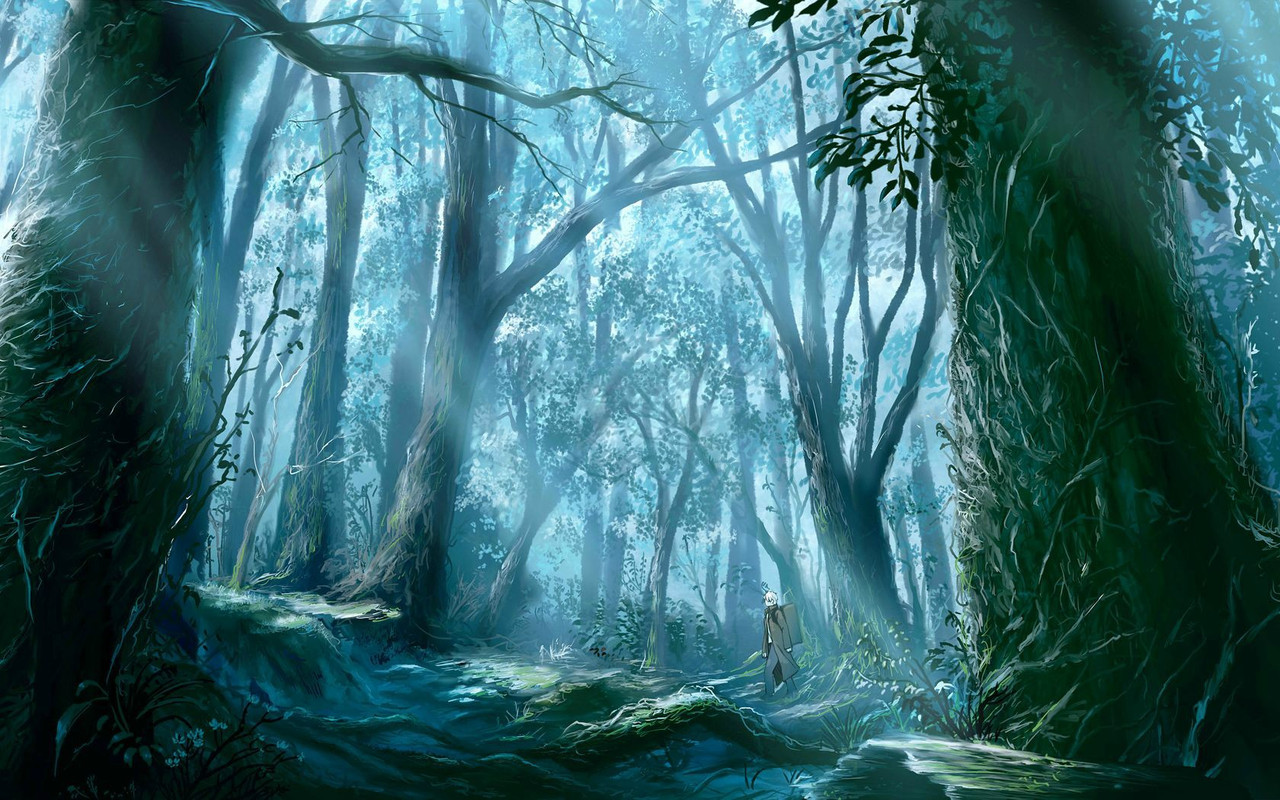
Continuing on from Season One, the Second Season of Mushishi Zoku Shou gives us a further selection of weird and wonderful stories centering on the interactions between many different kinds of people, mushi and elements of the natural world which they make up.
But just what exactly are ‘mushi’? Well to give you an idea, they are described as beings which are mostly invisible to the human eye, taking up a strange but captivating variety of forms, shapes and sizes. Their aim is simply to live. In doing so they can be seen as a symbol of life at its most basic element, a reminder that humans are not the only beings who are trying to survive in this world.
Each episode within this series looks at the fascinating world of mushi through human eyes, documenting many people’s encounters and experiences with these creatures. More often than not, each of these stories is observed by our central protagonist Ginko, who plays less of a role to directly advance the plot but rather acts as an observer, a representation of the audience satisfying our curiosity to learn more about this weird spiritual-like world where things are never fully understood.
Despite acting primarily as a cohesive plot element, forming one of the few bits of structure present across the show by tying together all these tales with the encounters he has, Ginko is also an intriguing character in his own right. Cool, calm and collected, he has a natural ability to form intimate connections with the various strangers he meets across his endless travels in an attempt to study and understand the different kinds of mushi which live in their world. The “mushi-shi” Ginko has his own story too which gradually gets revealed as the series progresses, though there is no order to this development since it occurs in one-off episodes like that of the rest.
The episodic nature of Mushishi is definitely a change of pace from what we are regularly used to in our watching experience, something which cannot just be consumed instantly but rather requires a bit of reflection on the subliminal moral and philosophical themes that are present. Although I found that this individualistic style of storytelling meant that certain episodes had a greater significance and emotional impact than others, the quality of the series as a whole was still maintained throughout. The ability to take a step back and appreciate each new episode as a unique experience in itself really stood out, with any fears over a lack of conclusion resolved after watching “Suzu no Shizuku”, which adapts the final manga arc following this part.
The Soundtrack is one of the more underrated aspects of this show, which it shouldn’t be because the music absolutely makes the overall atmosphere and impact of each story. Honestly what else can I say but brilliant – Masuda is nothing short of a magician, employing the use of gentle chimes and other simple, yet effective sounds to provide the gorgeous backdrop to this series and truly make it special. The tracks are just as good as the original, showcasing that talent is definitely permanent. Without any particularly standing out, I found that instead the best use of the music is to pull you into the show, putting you in a state of relaxation almost akin to meditation, where all worries drain away once the episode starts and Lucy Rose’s beautiful voice plays one of my all-time favourite Openings.
What, to me, is especially great though would have to be the endings. You know that experience you get after finishing a truly great anime? The awe-struck staring at your screen as you watch the credits roll? Well this series has that, but for the ending of every single episode, more than in part due to the efforts of Masuda and his masterful symphonies. Please never skip the endings before going onto another episode, because they’re simply too good to miss out on!

If you are intrigued by the prospect of a laid-back, calming, quietly beautiful yet ultimately melancholic show that presents a lot of ideas about what it means to be alive – leaving it up to the viewer to decide what’s truly important – then I cannot recommend this series enough.
It’s truly unlike anything else I have ever seen, which made forming an overall opinion and rating really hard until I realised a simple fact: I didn’t actually want this to end! This is a series that could have easily become monotonous and disengaging, each episode generally being completely different from the next, but in fact this has turned out to be something incredibly special because it reminds us of one thing: that if we have a life, then we should just try our best to live it. No matter what happens in the end, whether we achieve happiness or not, all that matters is that we had the ability to be alive in the first place – the potential to enjoy different places, people and things as Ginko finds on his travels.
There’s one thing which you can be sure of after finishing Mushishi: it’s something which you will never quite be able to forget.