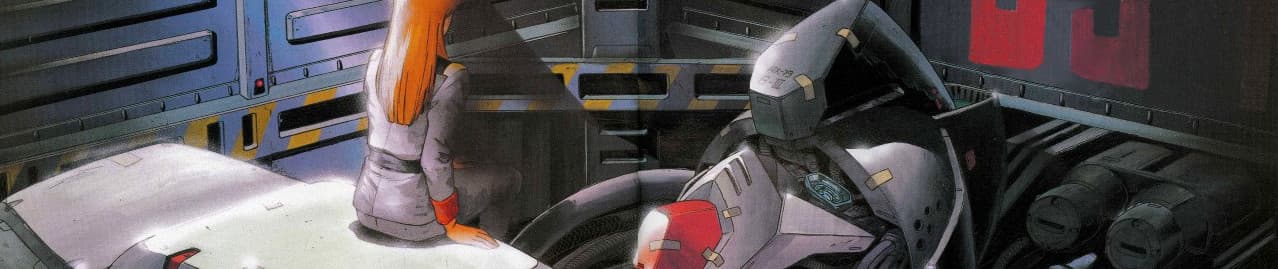
This review contains spoilers for Mobile Suit Gundam 0080: War in the Pocket

Since its debut in 1979, one of the things that Gundam as a series has been (generally) committed to is showing the horrors of war. Time and time again, we see child-soldiers thrust into powerful war machines, the weight of the world crushing their shoulders. Through their tribulations, they are often robbed of their childhood as they’re forced to take more and more lives, see more and more carnage. This commitment to showcasing the gravity of armed conflict can be seen in the name of the titular mobile suit itself: "Gundam," a portmanteau of "gun" and "freedom." The "gun" tells viewers exactly what this mobile suit is, a weapon: a tool to carry out acts of violence in order to achieve a particular goal. The goal in question is protecting and/or obtaining "freedom." It's an important ideal, thus suggesting, in an ends-justify-the-means fashion, that only an important cause calls for drastic measures. If one were to trivialize "Gundam," than its components would be trivialized and taken for granted as well: viewers might become desensitized towards violence and take freedom for granted. One might think that, for this reason, Gundam is careful to not glorify war, but quite the contrary is true, it's no stranger to it. While Gundam doesn't generally depict the main character as enjoying fighting (unless the fighting isn't depicted as dire) war and battles are made appealing through less overt methods. It can be as simple as color: to appeal to a younger audience, Sunrise made Tomino change the Gundam to look less militaristic and sport the vibrant colors it is famous for. The battles themselves are enticing and absolutely an exercise in spectacle. It's hard to get audiences to see the battles as horrific when they're often depicted as being so awesome to look at. However, more than anything, I'd say the main reason why war is often glorified in Gundam is due to Gunpla. Collecting, assembling, and displaying your favorite Gunpla seems to ask fans to divorce themselves from the bloody contexts surrounding the Gunpla. After all, you can appreciate how cool the suits look without thinking about how many people it murdered.
For these reasons, Gundam, more than some other mecha I've watched, often struggles to achieve a truly dark tone. While certain shows such as Iron-Blooded Orphans and Mobile Suit Zeta Gundam codify their bleakness in their grim endings, MSZ-006 Zeta Gundam and ASW-G-08 Gundam Barbatos Lupus Rex are ultimately some of my favorite suits simply because they're damn cool.
I'd say, out of all the Gundam shows, the brutal, gut-wrenchingly dismal Mobile Suit Gundam 0080: War in the Pocket is the most effective in showing the horrors of war. It is also the most effective in mitigating its glorification. Given that I gushed to a friend about how cool the MS-18E Kämpfer and RX-78NT-1 Gundam "Alex" were, it's safe to say that War in the Pocket isn't completely devoid of elements that make violence seem cool. However, War in the Pocket is still a great Gundam entry that shows the ugliness of war.
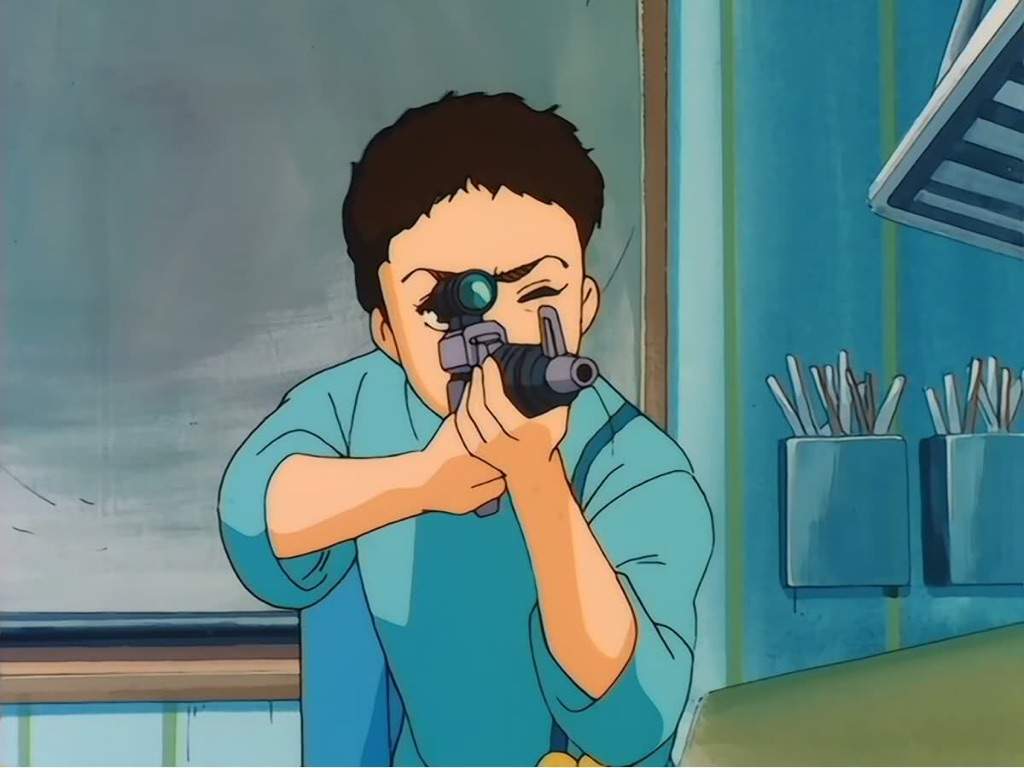
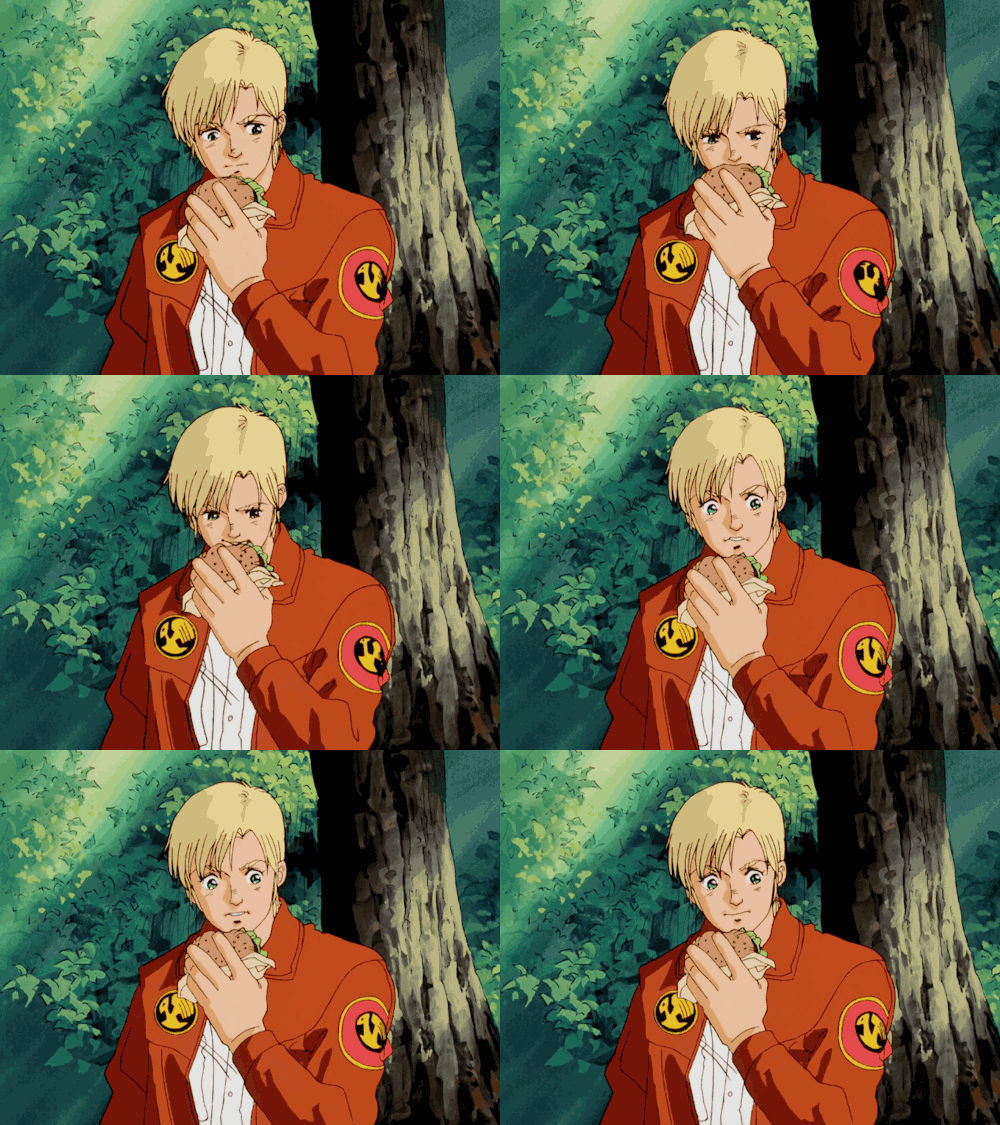
One of the ways that War in the Pocket effectively shows the horrors of war is through its main character, Alfred Izuruha. While most Gundam protagonists are pretty young, Alfred takes the cake at being a mere eleven. This exceptionally young age is effective in showing how everyone is roped into war, no matter the age. Alfred being a pilot would be kind of ridiculous, but, as war in the Pocket is committed to a higher caliber of realism than most Gundam entries, Alfred is somewhat of a bystander. This helps make Alfred a perfect protagonist for this deconstruction of Gundam. Remember how I stated earlier that many Gundam fans can feel conditioned to glorify its wars? Alfred is an embodiment of this: him and his friends perceive war as "cool" and they can't wait to see it in action. It's to the point where they seem to scoff at interactions that aren't violent. There's a very striking scene in which Alfred is being lectured by his mother while he's playing a video game. Alfred dismissively drones "Yes, mom," on and on while intentionally losing the video game by shooting at buildings instead of protecting them. Here we see how dismissive Alfred is towards someone who cares about him; caring not about improving himself, for all his efforts are put into his fantasies of war. Thanks to the somewhat glorified nature of war in Gundam, viewers are able to draw parallels between Gundam fans and Alfred. Alfred not being a pilot allows him to be a viewer, a bystander; someone who (for the majority of the show) has very little stake in the progression of the war, who's investment comes from a reason as shallow as "it looks cool." The very title and the corresponding eyecatch, War in the Pocket is indicative of Al's initial role. War is a mere game to Al, its tools can fit in his pocket; they're toys, mere instruments of entertainment. The beauty of War in the Pocket, then, is deconstructing this view and showing war as the beast it is. Toys are simple. Toys often aren't realistic. Toys don't hurt you.

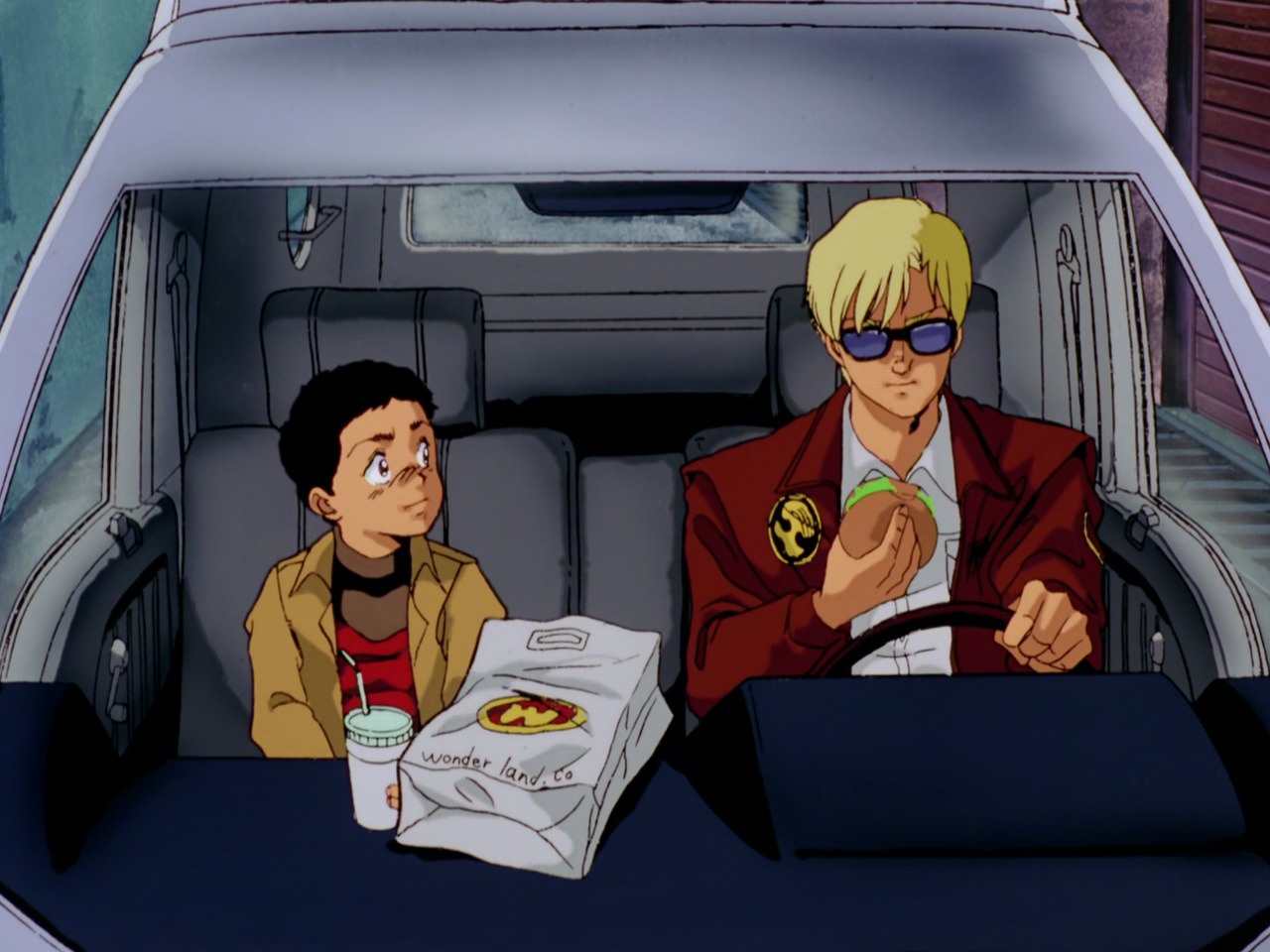
The OVA's realism is shown in part through Bernard "Bernie" Wiseman, the main character to Al's protagonist. It is mostly through Bernie that the events of the OVA are seemingly put into motion. Like Al, Bernie gets some character development which is impressive given the short runtime. Bernie's role makes the plot more complex and realistic, for he's a Zeon soldier. All Gundam entries prior paint Zeon in a nigh-entirely villainous light. It's fitting that the show that attempts to turn Gundam on its head is one in which Zeon is shown in a nuanced light. Yes, Cyclops Team is a black ops terrorist cell (doing it six years before it was cool), though Bernie is a legitimately good person who ends up sacrificing his life for the greater good. It's also interesting that Bernie may also be somewhat of a reflection of viewer ideas. At the beginning of the OVA, Bernie is simply a nobody who talks big to Al. He's barely seen combat, yet he brags to Al that he's one more kill away from being promoted. Like some viewers, he has grandiose, romantic visions of war, imagining himself as a hero. Bernie, Al, and the viewer have the same progression of seeing war for the ugliness that it is, and like some viewers, he has an aversion to it, having an extremely pessimistic view towards death "all dying means is that you got unlucky." When he decides to take up the fight, it's for altruistic reasons, and only because he has no other option. And of course, when he does fight, the result isn't pretty. All in all, Bernie isn't the typical Gundam hero and it goes a long way in making the show distinct, brutally realistic, and meta in its depiction of war.
I find it pretty ingenious how the setting makes the fighting more realistic, thus making the limitation feel organic. War in the Pocket takes place in a space colony, so due to the risk of tearing a hole clean through the colony, there is nary a beam weapon in sight. Instead, the mobile suits must rely on more traditional rounds. As they are more similar to the weapons used in actual, modern-day war, making it harder to divorce the mecha action from actual combat. There's something horrifying about seeing a mobile suit riddled with machine gun rounds, the pilot seat painted with blood. I'm not sure the same effect would have been achieved via a beam gatling gun.
Speaking of setting, as I write this, I realize how brilliant it is that the show takes place during Christmas. Even a time of merriment isn't out of war's reach, showing that battle and tragedy can break out at any time. Events such as the Christmas Truce are the exception, not the rule.

The show is realistic in other ways that I appreciate. There aren't newtypes (Except for a possible vision by Al that's quite chilling) and romance between people of different sides in a war is fledgling and tragic, unlike how its more glamorous depiction in other Gundam media.
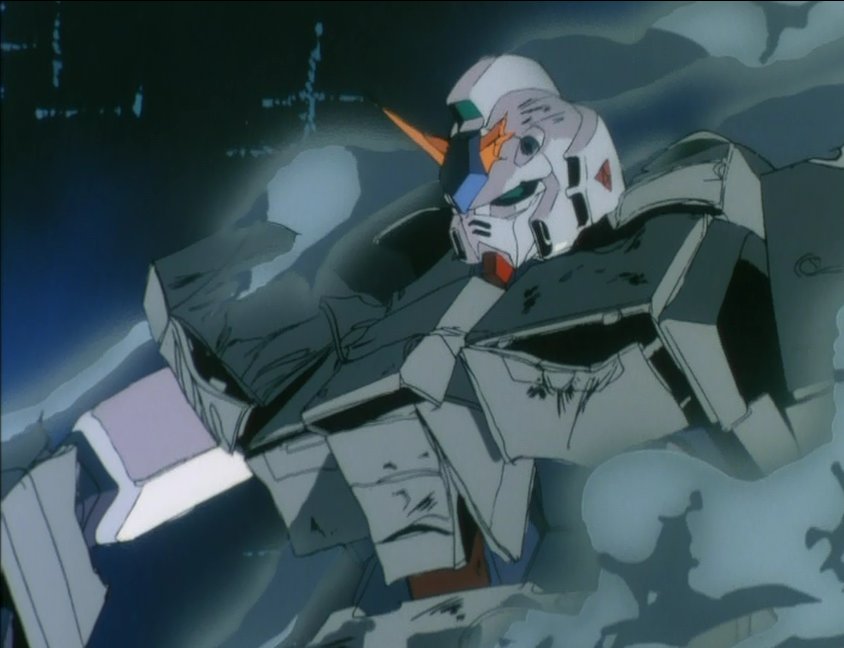
The production quality is great. It's an OVA so we're treated to quality animation. Battles are a lot more detailed and visceral; get used to a bit more blood than you're used to in your Gundam show. Given how the show pushes "War is Hell," your milleage may vary as to whether or not the fights being cool is a good thing. For what it's worth, they're so brutal that even if it doesn't help the message completely, it still pushes it. It helps that the Kampfer and Gundam Alex showcase destruction that is absolutely brutal and visceral. With Zeonic protagonists, we see a Gundam for the monster that it can be; this is helped by the fact that, when the Gundam first appears, its covered in armor which makes it look more menacing.
The music isn't phenomenal. It has good songs, but nothing too memorable, in my opinion. The dub's voice acting is hit or miss. Characters such as Bernie, Chris, and Al sound find but some minor characters sound a bit rough. Oh, and it should be noted that if the characters speak fast, you may be watching a sped up version of the show. Each episode should be about 30 minutes long, not the standard ~23 minutes.
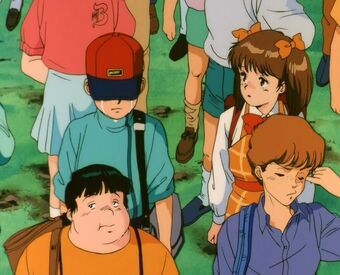
The ending is absolutely great and gut-wrenching. Irony is abound as viewers know that no matter if Bernie defeats the Gundam or not, the colony will still be nuked. There is a glimmer of hope when we discover that the man in charge of the nuclear detonation has been apprehended, thus sparing the colony. The irony and tragedy returns as Bernie wages battle with the formidable Alex, still under the impression that if he does not, the colony will be destroyed. His heroic, yet ignorant actions lead to his gruesome demise. With this, Al's transformation is complete and we see just how broken he has become. He appreciates interpersonal connections more (as shown by his more warm reception of his parents), though at a dire cost. Al has seen war for what it is and he can't help but break down crying. His friends, having no such development, are oblivious. "Kids just being kids," is now made horrifying, as they exclaim, "Don't cry, Al. Soon there'll be an even bigger war with even cooler mobile suits!" It is clear now that this is the viewer desensitized to war. There will always be another Gundam, there will always be more mobile suits. There will always be the war that somewhat trivialized simply because it's featured in a Gundam show.
We return to etymology of "gundam": "gun" and "freedom." The show tragically reaffirms these parts of a whole. It doesn't really need to be stated how it goes about showing how the mobile suits are weapons. In the final battle, they rendered Bernie as naught but hamburger. But what about freedom? Is it ultimately rendered unimportant because the freedom Bernie found himself dying for was ultimately pointless? I think it's a lot more nuanced than that. Freedom is not important because it's a physical state of being, but because it's an ideal, a metaphysical state of mind. Everyone wants to fight for freedom, but as it's an ideal, it means something else to every person. In a way, this makes freedom even more beautiful and worthy of protection. On the other hand, it makes it tragic and unattainable, making war seem even more pointless.
I've been gushing about War in the Pocket this entire time, so why, then, does it does it not have a perfect score? To be honest, it's probably its length. Yes, it does a wonderful job of developing characters in such a short timeframe, but it can only do so much. While this is by far more dismal than Zeta, and thus does a better job of showcasing the horror of war, I ultimately cared more about the characters in Zeta and it impacted me more when bad things happened to them. Again, this show is really sad, but it's more sad that it happened in general and not so much that it happened to Al or Bernie. Not to mention, we get very little of Christine. This doesn't detract from the show much, for me, but it's why it doesn't net a perfect score for me.
But this show is still very well done. It's one of the best Gundam shows I've seen and is more effective in its particular theme than any Gundam show before or after it, and for that, I recommend giving it a watch.
9.2/10
A-
15.5 out of 16 users liked this review
