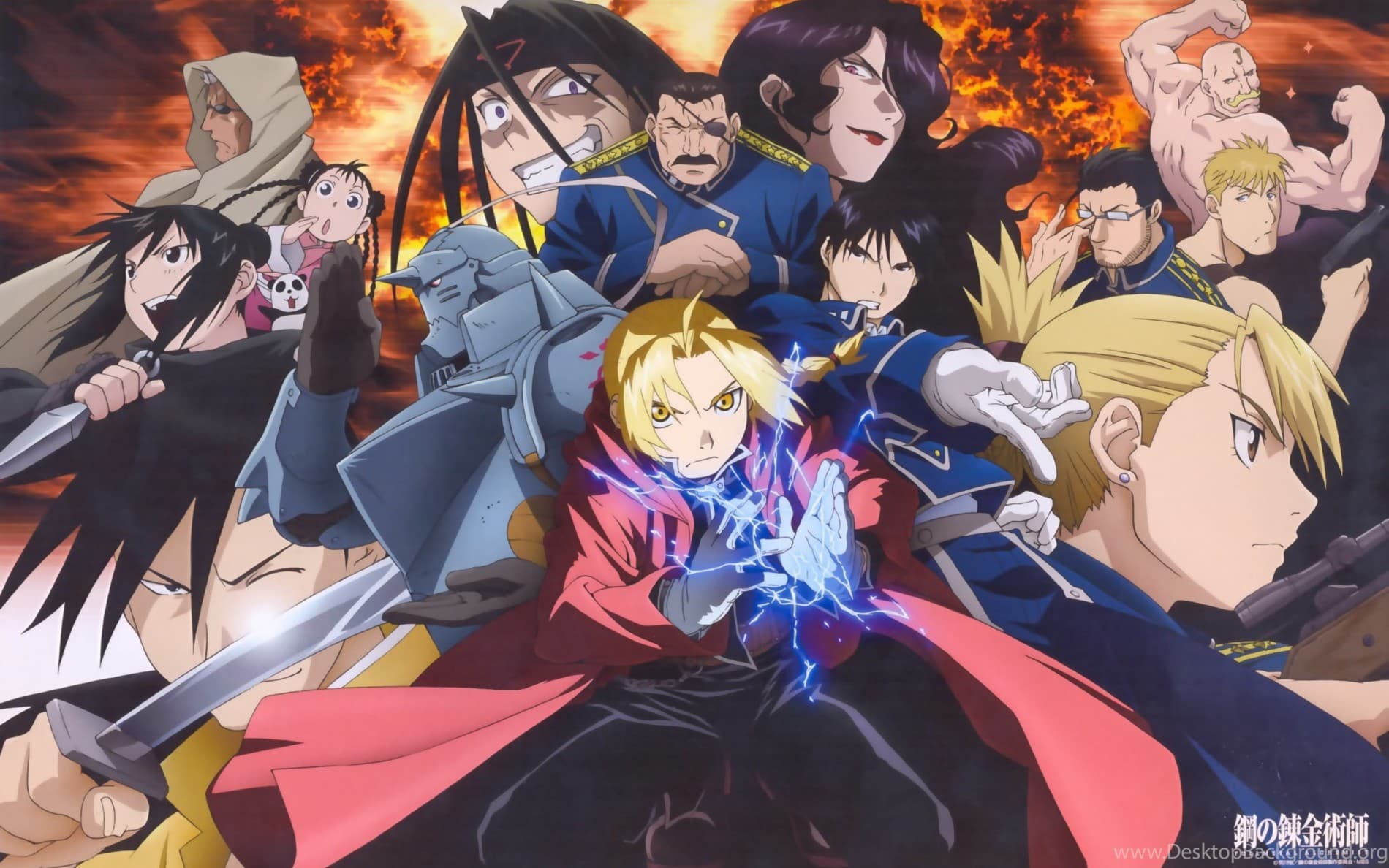
Fullmetal Alchemist: Brotherhood
a review by appelsientje

appelsientje
5 years ago·May 21, 2020
95
/ 100
a review by appelsientje
5 years ago·May 21, 2020

Recommended for: lovers of shonen, action/adventure, lighthearted, great character-building, great-world building, philosophy, conspiracy
Fullmetal Alchemist: Brotherhood. When I first finished watching this anime, I felt a bit verklempt. It was an enjoyable ride but I did not connect with it as much as I would have wanted. Knowing about its raging popularity, I expected to finish it with stronger sentiments. It was not until a year later that I revisited parts of this story, in a new light, with new eyes. All art is at once surface and symbol, this definitely rings true for FMA:B. Approachable for all ages, and layered for those who seek a more sophisticated experience.
I know that everyone and their mother has probably already seen this show and formed an opinion on it. I am not here to convince you otherwise, but I would like to share my thoughts on it regardless.
Plot
The concept of alchemy, creating new material from the sum of its parts, is layered throughout the entire story. Edward and Alphonse's incentive for becoming State Alchemist is because they failed to resurrect their mother, by believing that the sum of her parts would be sufficient to bring her back. A mistake rooted in hubris, if you will.
The villains: Pride, Lust, Greed, Gluttony, Wrath, Sloth, and Envy, represent the parts of the human psyche when separated. We all carry these weaknesses within us. They tempt us to do evil, and yet humanity is not, which leads me to believe that we must exist beyond the scope of these mere elements. There must be parts of us that are irreducible.
The concept of alchemy overstretches the boundary of a single person or product when the idea of individual elements coming together is applied to the government of Amestris. When humans work together they can do incredible good and terrible harm. When individual intent becomes a harmful ideology it can lead to genocide. This was bravely illustrated with the Ishvalan genocide, a central component of the story. Genocide is the product of hatred, ignorance, savagery; sentiments which are amplified a thousand-fold when channeled through the masses.
All of this implies that when individual elements are combined, something more than just its product is formed. The lessons that you learn in life, the choices you deliberate, the paths you take and those you stray from, they are as integral to you as your physical parts. And when these individual experiences are combined, they can change the world. That's one of the lessons that FMA:B teaches us.
Knowing this, Edward gives up alchemy to save Alphonse in the end. He realized that despite its great power, it could not give one more than they already possess, this is the very concept of equivalent exchange.

Characters
As if a strong narrative wasn't enough, FMA:B also has a broad cast of well-written characters. We see Scar who is initially portrayed as a villain, and who is increasingly humanized as the show goes on. We see Winry, who suffers at her parents' deaths. Yet she is strong, kind, good-willed despite everything.
My favorite by far is Roy Mustang, a morally ambiguous character who is at once a hero and a war criminal. Being involved in the Ishvalan genocide, he took the lives of innocent people, and yet he grew to fight against the very government he was a part of.
We get to see many sides of the same story through the eyes of these characters, we see the world through them and that's why we care so much about its salvation.
The relationship between Riza and Roy, and Edward and Winry, is developed with much grace. I felt myself rooting heavily for them, and that's coming from someone who is rarely moved by relationships. Perfectly paced and alluded to, I understood why they cared for one another.
Art & Music
Brotherhood's style is smooth and modern. It makes use of gorgeous vibrant colors and a fluidity that fits the action. The art is sometimes comedic, with Ed and Al turning into hilarious cartoonish versions of themselves when they're shocked.
When it comes to the soundtrack, 'Let It Out' is undeniably its crown jewel. Used most effectively when it faded in toward the end of an emotional episode, it's a symbol of emotional catharsis.
「 The whole is greater than the sum of its parts. Watching FMA:B and reevaluating it has definitely expanded my appreciation for it. The effort we put into connecting with others, the time we take to understand each other, better each other: they make rise for a more sympathetic world. That's what Fullmetal is about: humanity, and what we can achieve when we nurture it. 」
40.5 out of 44 users liked this review