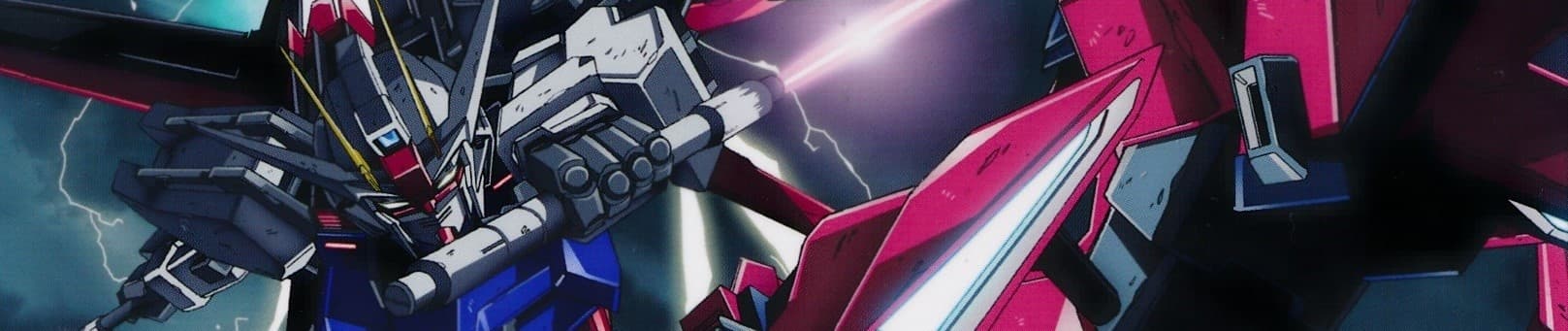



Gundam SEED is a bit of an oddball in the Gundam franchise.
As of this writing, there are at least thirty Gundam shows/movies. The only thing bigger than the franchise itself is its fandom, with its disparate tastes. With so many entries and universes, there’s a lot for viewers to latch onto. Conversely, there’s a lot for viewers to dislike.For this reason, it's somewhat hard to get a consensus regarding Gundam entries. For example, I absolutely loathe Mobile Suit Gundam ZZ as a sequel to Mobile Suit Zeta Gundam, and many agree that it's an odd show, but it's not hard at all to find those who not only like ZZ, but prefer it to Zeta. People often cite Victory Gundam as one of the worst entries, but it has a sizable number of fans, including myself.
The Gundam SEED duology is such an odd case because, at least in the Anglosphere, there's a clear consensus that it's the worst Gundam series. People will scramble out of the woodwork to defend ZZ and Victory. People will give nostalgia cushions to Gundam Wing. Gundam SEED and its sequel are given no such concessions. To be clear, I'm not saying that no one on this side of the pond likes Gundam SEED. Given how big the franchise and fandom are, that would be a ridiculous claim. However, it cannot be denied that revulsion for this series is more widespread and accepted than other entries. Early into my journey with Gundam, I knew that people thought this show was bad. The reason always seemed to escape me, but the disdain for this show was palpable. For me, the reception became bigger than the show itself and as I completed Gundam shows one-by-one, dread set in as Gundam SEED the Terrible loomed closer and closer. Judgement Day arrived and I took the plunge.
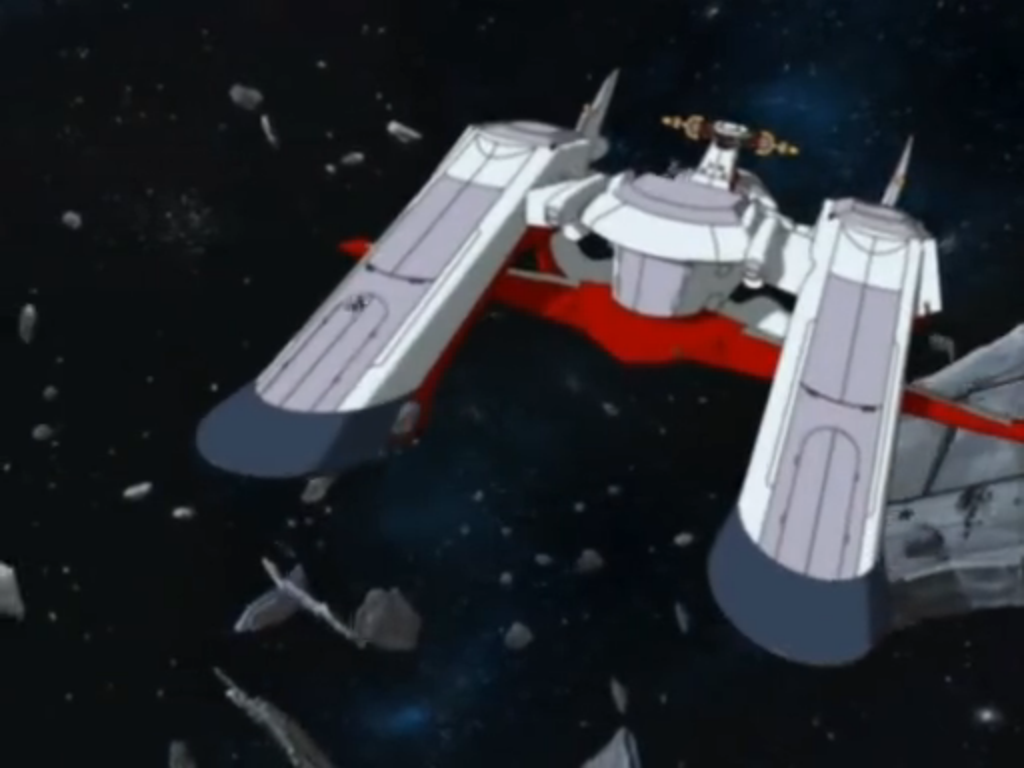
What I found, however, was not the coldness of the abyss but the warmth of Cloud Nine. I was pleasantly surprised and then some. I really enjoyed my time with Gundam SEED. I'm really unsure what all the fuss is about, but I'm prepared to defend this show from the legion of haters it's accrued over the years. While Gundam SEED has its problems, they're not glaring enough to make it a bad show. I found Gundam SEED engaging from start to finish. And to make this hot take completely nuclear, I'm willing to go so far as saying that the original Mobile Suit Gundam, which people often accuse SEED of "ripping off," is inferior to SEED.
Gundam SEED follows Kira Yamato and his group of friends who all live in the colony of Heliopolis. It is year 70 of the Cosmic Era and the war between the Naturals' (normal humans) Earth Alliance and Coordinators' (genetically modified humans that live in space) ZAFT is in full-force. Heliopolis is a neutral colony, but it finds itself under attack by ZAFT operatives. Their goal is to steal the five prototype mobile suits that the Earth Alliance has transported to Heliopolis in secret. The mobile suits are the G-Weapons or "Gundams." While ZAFT manages to steal four of the Gundams, Kira manages to commandeer one, the Strike. In it, he faces off against his former friend, Athrun Zala and it is revealed that Kira himself is a Coordinator. Despite this fact, he finds himself serving with the Earth Alliance.
One of the first things I praise Gundam SEED for is how realized the coordinators are. The Coordinators serve as the Cosmic Era’s analogue for the Universal Century’s Newtypes. At Gundam's advent, Newtypes were ill-defined and virtually invisible. Amuro's aptitude at piloting the Gundam was originally not attributed to his status as a Newtype, but the mobile suit's Learning Computer. Here, the divide between Naturals and Coordinators is very clear. Intrinsically, we know why Naturals dislike Coordinators; as genetically modified beings, it's obvious that they serve as the "haves" to Naturals' "have-nots." And of course, later on, we get a more in-depth look at the attitudes regarding the Coordinators, making this world feel quite real. I think Kira's status as a Coordinator breeds interesting drama as he's essentially pulled between two worlds, constantly having to ask himself who he’s fighting for, and why. We also get to see the bias and racism towards Coordinators and Naturals firsthand, contributing to this “realness”. Most importantly, Coordinators don't dominate the cast in terms of competence and importance. In the Universal Century, Newtype status starts to be handed out like candy, giving the feeling that only Newtypes matter. Here, while Coordinators are still strong, Naturals get their own time to shine, as indicated by the presence of Naturals such as Cagalli and Mu La Flaga.

Gundam SEED's biggest strength is in its characters. I've heard SEED once described as melodramatic. The emotional, intercharacter drama certainly is front and center, so if that's absolutely not your thing, I'd advise you to steer clear of SEED. The characters are loud, they're emotional, and they're dramatic. If drama isn't a hard "no" for you, however, I'd urge you to stick around. After all, mecha, more often and not, isn't just an excuse to watch cool robots fight one another, but also a vehicle to explore political themes. Why not use it to explore character themes as well? More importantly, as criticism, "melodrama" is often used to describe characters who's characterization doesn't match the level of drama they're thrust into: cardboard cutouts emoting, essentially. I'd hesitate calling Gundam SEED melodramatic because I was enthralled by the characters and I was legitimately engaged with their struggles.
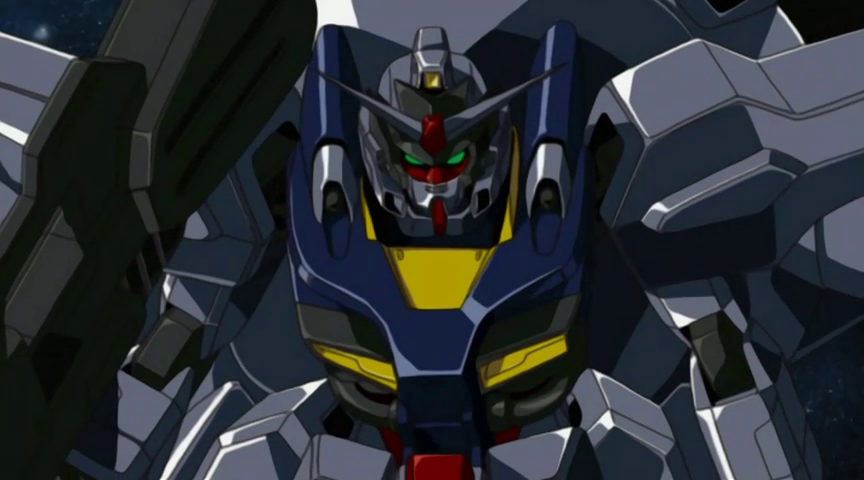
Former friends, Kira and Athrun have a history together, making their rivalry feel a lot more personal and poignant than a lot of other Gundam rivalries. There's an element of tragedy to their relationship from the outset that really makes me want to know how everything will shake out.
Rau Le Creuset is among the most compelling Char Clones I’ve encountered and I tip my hat to Kevin T. Collins’ voicework. Creuset has both Char's charisma and his menace, the latter played to a chilling effect as he comes into his own during the final arc. It is there where he's revealed to be an unhinged product of man's greed, the show's themes spectacularly coming together in the form of its villain.
It's a testament to how good SEED's characterization is that I ended up empathizing with characters I initially didn't care for. At the end of the day Rau Le Creuset is a murderous nutjob, but his backstory is tragic enough that you can't help but feel sorry for him, even if his actions are heinous. I wasn't a fan of Liteunant Natarle Badjiruel's cold, logical attitude, but her sacrifice borne from her character development still got to me. Finally, while Flay Allster's flagrant racism made me initially dislike her, I saw how the war matured her, saw how her relationship with Kira changed her. I desperately wanted her to reunite with him so she could reveal her true feelings. Early on, I wouldn't have expected Flay's death to hit me as hard as it did.
While I like Amuro and Char, that's mostly due to their various appearances over the years compounding on one another. When I had finished the original Mobile Suit Gundam, they hadn't left that much of an impression, unlike the characters of Gundam SEED, which managed to grab my attention in one one show.
Characters are seldom one-note; I thought Lacus would be a very shallow, one-dimensional character that espoused peace to the point of absurdity, but I was very pleasantly surprised to see the singer take on a commander role at the series' end.

It's often an unsung praise in regards to media, but momentum is a vital component of enjoyable stories and Gundam SEED has this in spades. Each episode ends in a way that simply begs you to watch the next, leading to a very kinetic viewing experience as episodes link seamlessly to one another, if not chronologically, then in tone and situation. As much as I love Turn A Gundam, its format doesn't do much to actively retain viewers, unlike Gundam SEED which positively grabbed me and refused to let go until I finished the show.
Like most Gundam shows, Gundam SEED showcases the horrors of war. It's not really cited as a dark Gundam show, but SEED can get pretty gruesome, from the somewhat graphic deaths of soldiers to the losses the characters will face, SEED can be a taxing show for viewers and characters alike. In Gundam the horrors of war are often conveyed via the enemy body count that the pilots accumulate over the course of the series. I think SEED takes it a step further by having the cast consistently lose loved ones, once again, making things feel more personal. Pretty much everyone gets a turn in the trauma conga line and it really sells how horrible war is. What sells it even more are the perpetrators of the conflict — ZAFT and the Earth Alliance. Neither side is noble, with both committing atrocities due to being led by racist, power-hungry maniacs. You could argue that it's unrealistic, but it certainly gets the point across that war brings out the worst in us.

The music is top-notch, really helping in setting the sad, yet epic tone of the series through sorrowful strings and boisterous brass. Like any good Gundam show, the music gets you pumped. SEED also has the nice distinction of having very, very good EDs. I knew and loved “Anna ni Isshodattanoni” months prior to watching SEED, to the point where it quickly became one of my favorite EDs. I was sad to see it go in episode 27, but its successor, “RIVER” also became a favorite. I wish I could say I loved the final ED, “FIND THE WAY” as much as the other two, but it's much too sad for me and I think it seldom fits the show. Unfortunately, I can't say I particularly cared for any of the OPs.
Finally, what's a Gundam show without its titular mobile suits? The Strike is pretty cool, albeit somewhat basic, as per standard protagonist suit fare. Not to worry, however, because SEED has Gundams in droves. While the amount of Gundams is pretty conservative in the first half (I say that, but there are still five), they're handed out like candy in the second half. The amount of Gundams consistently sortied would make even Gundam Wing blush. But I don't care, I was so giddy to see these cool, powerful suits duke it out. You might not care for SEED if you're more into grunt suits. As someone who prefers Gundams anyway, I welcomed the excess. Part of the beauty of having more Gundams is that the designs can be a bit more out there. With only a few Gundams, you're stuck with the relatively milquetoast Americana-colored suits such as the Strike (though I do like those wings). With more suits, you can have more "out there" designs such as the Providence. As fair as Gundam suits from the show go, the Aegis is my favorite. It’s quite elegant and the red goes a long way in making it stand out. SEED certainly has its fair share of grunt suits as well, including a doggy!

While I've praised the characters at length, they're certainly not perfect, however. True, while I found the character*ization* compelling, the characters themselves could have been a bit more realized and fleshed out. SEED does a good job of showing us who the characters are in this very life-changing situation they find themselves in, but I grasp at straws defining who they were before, their "normal" as backstory takes a backseat. While Athrun and Kira are friends, I couldn't tell you what their friendship was characterized by or how they became friends in the first place. Athrun and Lacus are engaged at the start of the show but I couldn't tell you the first thing about their relationship because we hardly see them interact. Lacus talks about how Athrun's changed, but this rings a bit hollow to my ears because I only have a sense of the "after" without the "before" to compare and contrast. Similarly, Kira is defined by his bond to his friends, but a lot of the time, we only see this relationship's strain. It might have taken away from the tone, but an episode where they're all having fun together could have really helped in this regard. These are but a few examples of characters being somewhat unrealized. I'd say SEED has a problem of "telling, not showing," but honestly, SEED tends to tell little, too, leaving viewers to fill in the blanks in regards to character backstories and relationships: potentially great for fanfiction readers and writers, bad for everyone else. It certainly wasn't a dealbreaker for me, but be aware that if you scrutinize these exciting characters, they may come up lacking.
In regards to the Rau Le Creuset, it may be a case of liking him as a concept more than the character himself. He certainly could have been handled better; his rivalry with Mu La Flaga certainly makes sense thematically as he's a clone of Mu's father, but Mu has a burning hatred for Creuset far prior to this revelation. Going back to my previous point, these two clearly have a history, but it's never adequately explained. Furthermore, Creuset's exciting traits were pretty backloaded; prior to the final arc he comes across as your standard, mysterious Char Clone, nothing more, nothing less. Fresh from the ending, it's easy to say he's among my favorite Char Clones, but looking at the series as a whole, he can come across as a somewhat milquetoast villain. His true intentions could have been seeded a bit more throughout the series. As is, his grandiose status feels unearned, albeit entertaining.

Then we have Cagalli, one of the only SEED characters I actively dislike (there's also Azrael, but he's designed for the express purpose of being a smarmy hatesink). She's a tsundere who seems to scream at and berate each and every character she can find. Her know-nothing-know-it-all attitude was very annoying and her "tender" scene with Athrun was a joke compared to Kira's own with Lacus because her interaction was simply her yelling at him.
Don't leave thinking characters are SEED's only blight, though.
I didn't quite care for the show's character designs. While I could ignore it after a while, whenever the designs are focused on, such as during closeups, I can't help but think about how bad it looks. Not hideous, mind you, but I'm certainly not clamoring for a SEED poster to slap on my wall. The eyes of the main characters are quite large and scream "early 2000s anime," and the lips are paradoxically too-defined and not-defined-enough, making characters occasionally look odd when they talk. In general, characters look somewhat "soft" like an amateur Play-Doh project.
Production values can be lacking: most notably in the animation department. The most egregious example comes from Athrun and Kira's final fight, which isn't actually animated: instead, the action is conveyed via still images of various attacks. One of the emotional highs of the show is essentially a Microsoft PowerPoint presentation. If you thought this brand of cutting corners was bad, just wait until you see the metric truckload of flashbacks and clip shows. Gundam SEED features at least three episodes that are primarily clip episodes, some handled a lot better than others. This isn't too out-of-the-ordinary in regards to anime. It's certainly annoying, but you can just skip it and be on your way. The problem with SEED, however, is that clips and stock footage weasel their way into a great deal of episodes. It feels like the SEED showrunners think their audience has the memory of goldfish, for they'll show flashbacks of very recent events multiple times in one episode. This ridiculousness quickly went from funny to frustrating. I hear the remastered edition fixes these problems, but I watched the English dub of the original release, so my rating is with these defects in mind.

It's not really anything I minded too much, but this series is not at all subtle. While I'm fine with the heightened emotion, I'm sure it'll turn viewers off who want a more subdued show. Characters cry sparkly anime tears a lot, declarations are sworn a lot, there's wanton violence that's as graphic as you can get away with on a daytime slot, Kira's sexual relationship with flay eschews subtext in favor of "text," philosophy is made quite bare thus relieving viewers of thinking. SEED is "extra," and while the characters' backstories can be bare, their personalities and what happens to them are anything but. I'm sure this can lead SEED to feeling shallow and "populist." SEED may not be "deep", but it certainly manages to show the horrors of war while not forgetting the humans that wage them, all while being entertaining throughout.
The more I think about it, the more I see flaws start to show: the SEED factor is never adequately explained, Kira can be a bit too powerful, like Zeta, the protagonists have a very clear moral high ground, Lacus' role as freedom fighter isn't seeded too well, etc. None of these are dealbreakers for me, but together, they can prove too much for some. By no regard is SEED a perfect show and as I said before, you can see the cracks quite clearly if you begin to scrutinize. But ultimately, I struggled to find SEED particularly flawed in terms of Gundam shows. It might be a bit idealist, it might be a bit dramatic, but that's fine in my book. Gundam is massive, so there's room for more than one type of show: they can't all be Turn A Gundams, they can't all be Zetas, they can't all be Iron-Blooded Orphans, nor should they be, because that would be redundant. Gundam SEED is a fun show that makes the ethos of Gundam salient while still being entertaining. I think new and old viewers alike can get something out of this show.
Honestly, I'm really not sure what the hubbub is about. It's not the best Gundam show, but it's nowhere near the worst, either. At worst, I'd say SEED is middling. Maybe I'm just very easy to please, or maybe the reception of the sequel tarnishes the original. Either way, I'm hungry for more and I'll be starting Gundam SEED Destiny very soon expecting to find more of what I loved and hoping that my criticisms will be addressed.
8.4/10
B
