
Cells at Work!
a review by superp2222
a review by superp2222
Just like a certain other genre of fan creations, if an object exists, there will be gijinkas of it. Cells at Work takes that common rule of thumb in the anime community and uses it to educate us of a concept that many of us slept through back through highschool in a method that is not only clear to the viewer but also gives them an insatiable desire to learn more.
Given the structure of this anime and what its informative roots, I will be reviewing this anime in a different style. Rather than just describe overall character development, I will give my opinion on how well the studio interpreted the role of each cell, and rather than describe the overall plot, I will break down the interpretation of each different scenario the very unfortunate human body in this anime had to go through and how well the anime represented it. That being said, there will be spoilers, so you have been warned.
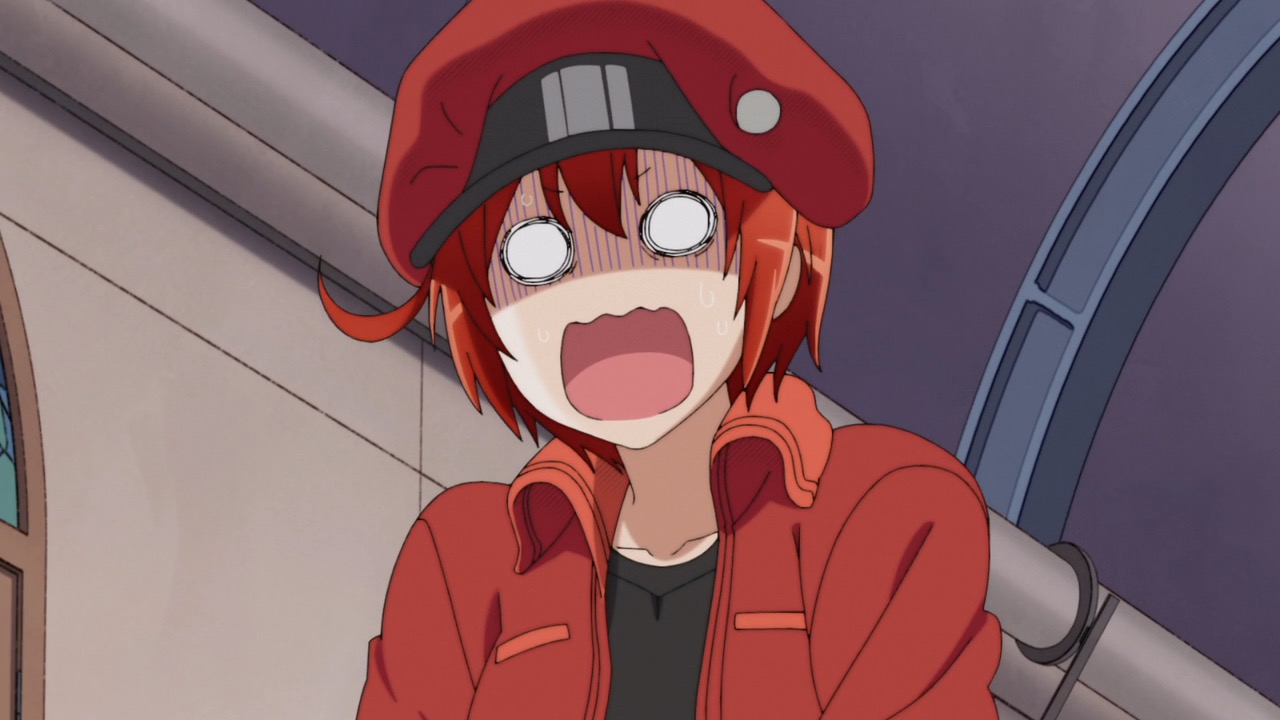 First of all, let's start with the characters. The anime graciously introduces us to the wonderful gijinka world of our human body by using Red Blood Cell AE3803 here. A fresh-off-the-marrow Red Blood Cell who's hopelessly bad with directions. Over the course of the series, we see her carrying various items to represent the various things our own red blood cells carry, in some scenes, she's carrying a picnic basket full of food and water—the nutrients that our cells need to survive, and in other scenes, she's squeezing a box of fresh oxygen through an oddly cramped alleyway—that oxygen is what prevents our cells from dying. Over time, we see her get a bit more familiar with her daily job and also the paths she takes to navigate through the body, the anime did a great job of interpreting our vast and long mess of blood arteries and veins and how cells move through them.
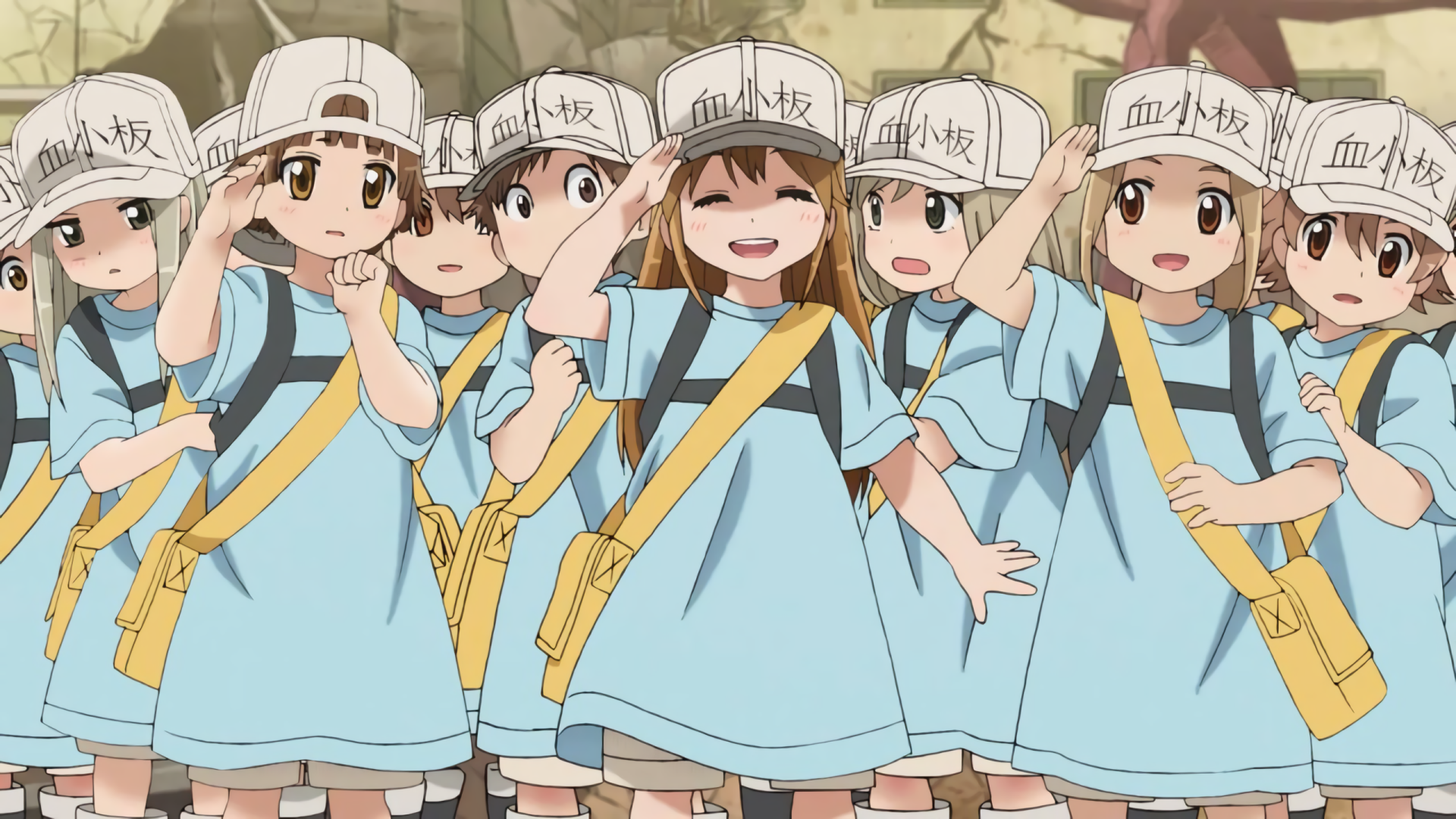 The platelets are a small bunch of cells that are the repair party of the body, using a combination of a finely woven mesh and local red blood cells, they form a clot in the opening of the injury and eventually slowly seal the wound back up. The anime's interpretation of the platelets are surprisingly not fanservice as platelets are statistically 20% smaller than the other blood cells in the body, so before the anti-loli-league intervenes, yes, it would be scientifically accurate to depict platelets as lolis. As for their actual purpose, the anime did a stunning job of visualizing how they patch wounds, the mesh is described as something the platelets weave, and when they're ready to patch up the wound they gather local red blood cells to clot up the hole.
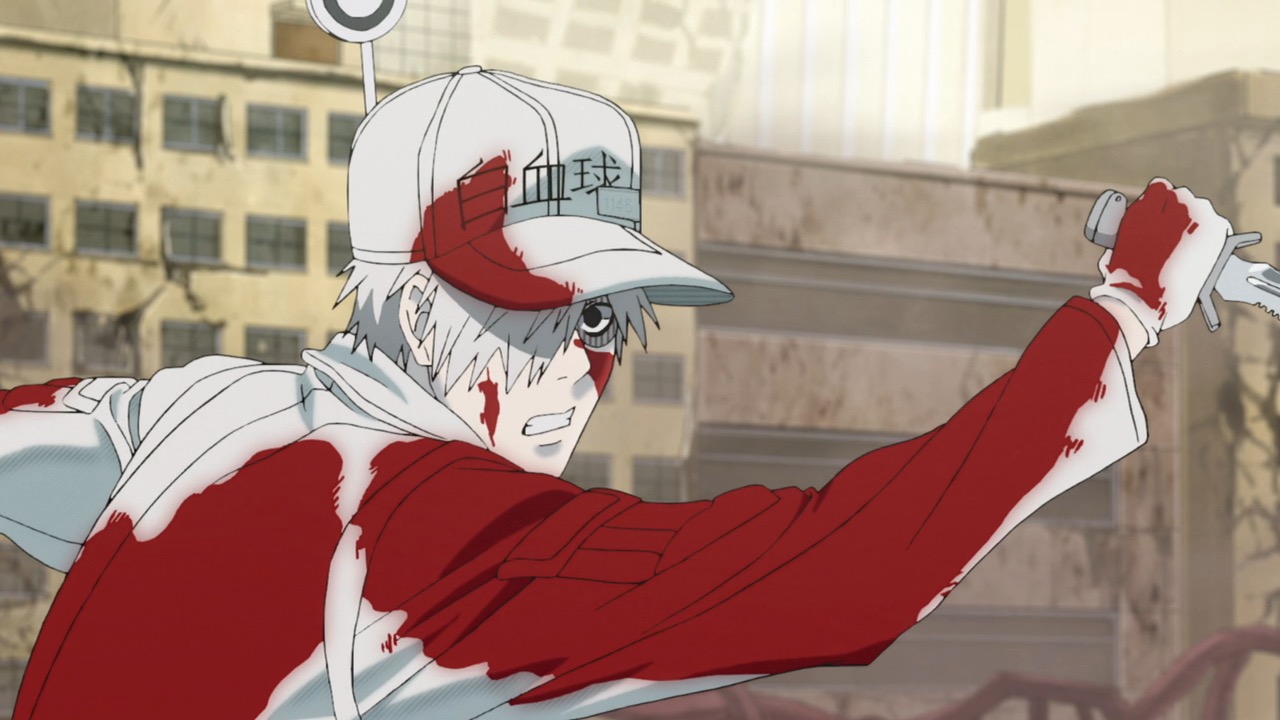 Now we move on the the main focus of the anime: the Immune System Cells. U-1146 is a Neutrophil, the first responder of our body. The anime did a great job of portraying the Neutrophil's general purpose as well as its armament. Neutrophils are automatic bug police and will converge upon any foreign substance with their detectors with unrelenting fury, while generally weak, they are able to hold plenty on their own. That is why the anime interpreted their armament as a simple knife. Its not much but it gets the job done. The anime also interpreted their migration ability very well, depicting Mr. U-1146 popping out of various odd places like vents and rooftops
Now that the primary blood cells have been described, lets go through a rapid-fire judgement of how well the anime interpreted the other cells
Macrophage and Monocytes
 The ara-ara big mamas of the immune systems, Macrophages are extremely large powerhouses that dish out a lot of damage. Before permanently settling down in a specific area of the tissue, Macrophages are migratory cells known as Monocytes. The anime's interpretation of them are very accurate, depicting them as using giant blunt medieval weapons to dish a ton of damage, and also a lot stronger than the neutrophils. Their interpretation of Monocytes are also accurate, but it should be noted that despite being technically the same cell, they are fundamentally different, like how a breed of dog may differ despite being the same species.
T Cells and Co
 These are the elite squadrons of our body, dispatched when our frontliners can't contain the problem on their own, the anime did an amazing job of interpreting how these t-cells are raised, as well as how some t-cells move on to become Helper T cells and Memory T Cells. Not only that, but they also described the Naive T Cell transformation process (in the most Jojo way possible). It really makes their position as the SWAT team of our body accurate.
B Cells
 These guys are the antibody producers of our body, in reality the B cell is a factory spewing out never-ending Y-shaped proteins called Antibodies that cling to target antigens and act as a disruptive homing beacon for other cells to focus down while slowing down the antigen. The anime took a different approach, rather giving the antibodies an offensive purpose. In the anime the antibodies directly melt some antigens, but still conveys the overall purpose of the B cell with accuracy.
Dendritic Cells
 These guys are the true support of the Immune System, their job is literally just to be an info conveyer, which is why they are constantly on the phone in the anime, but apart from that, they are the cells that activate T cells and B cells in the event of an emergency, and the anime did a great job of showing how Dendritic Cells activate Naive T cells or signal other cells to get to the affected area.
Eosinophils and Basophils
 Last but not least, we have the parasite specialists, Eosinophils are cells that specialize in parasites, and Basophils also specialize in parasites, but don't have a lot of other purposes. The anime's interpretation of that is a cell that is equipped to go monster hunting, but not suited for one-for-one combat, making for a very understandable representation
Now we move on to the various scenarios covered in the anime, these can be categorized into 2 main categories: External injuries and Internal Antigens.
With external injuries, the anime did a great job of showing just how this society of cells can be so fragile. Whenever a cut is opened, a massive chunk of the landscape is blown away and countless red blood cells are lost, in the more extreme cases like hemorrhagic shock, so many blood cells are lost that not enough nutrients are delivered, causing many cells to die and cause the body to start dying. The anime described all these scenes very well, from the cooling of the body due to the lack of cells producing heat to the damages done by an injury of any scale. On the other side of the spectrum, heat stroke drains your body of its internal fluids and the body expends the last of its fluids in an effort to cool itself down, with prolonged exposure the blood leaves your brain and goes into a stroke. Without proper treatment the body can die like this and the anime made that possibility very real.
In internal antigens we have Bacteria, Viruses, and Cancer. Bacteria most commonly enter because of an open wound, and most of the time your body's able to immediately respond to the intrusion. Of course, as described in the very first episode, if a bacteria manages to control a key organ like the lungs, it puts the human body into jeopardy. With viruses the anime's interpretation of the body's natural response is very accurate. First, the frontliners arrive on the scene, then, the rest of the body's defense forces arrive. The body heats up to try to smoke out the antigen, and it produces extra mucus to try to ensnare the disease and expel it as soon as possible. On top of that, it also accurately depicts how viruses reproduce: they hijack cells and make them produce more viruses. It does make me look forwards to seeing how the anime will interpret bacteriophages and man-made viruses that are designed to help. Finally with cancer, they disguise themselves as ordinary cells, and their volatility and susceptibility to mutate makes them a deadly force that killed thousands every year. The representation of cancer through a cell that more resembles a demon from Demon Slayer makes this concept very understandable even for younger viewers.
Apart from the already very accurate and wonderful cast this anime has shown, its art and sound design is very well-done as well. The world looks very well animated and the battle scenes are very clean. On top of that the worldbuilding is very well done and the OP and ED are both very catchy.
This anime has proven to be a very educating experience and I honestly learned more than High School biology class has taught me.
28 out of 30 users liked this review
