The Best Anime of Spring 2026

This spring season ushered in more highly anticipated and visually stunning anime than I had seen since, well, maybe two seasons prior? Anime fans continue to eat well each season, and spring was no exception. Despite early trepidation due to its past project, Zom100, BUG FILMS' rendition of Kamome Shirahama's beloved Witch Hat Atelier knocked it out of the park. Meanwhile, quiet dramas and surprise dark horse picks rounded out the season, from Nippon Sangoku and Dorohedoro Season 2 to Botan Kamiina Fully Blossoms When Drunk and Akane-banashi. There was also a whole new series from Fullmetal Alchemist's Hiromu Arakawa
Below are the top 10 anime of the Spring 2026 anime season. Let us know which ones you watched, made your top 10, and what anime you bounced off of in the comments.
10. Needy Girl Overdose

I don't know if Needy Girl Overdose will appeal to folks who are even a little less online than I am, but as someone who found escapism in the internet during my teenage years and somehow managed to turn the hobbies, relationships, and opportunities I developed through the internet into a career; I feel this anime's themes and the emotional journeys of its characters in my bones!
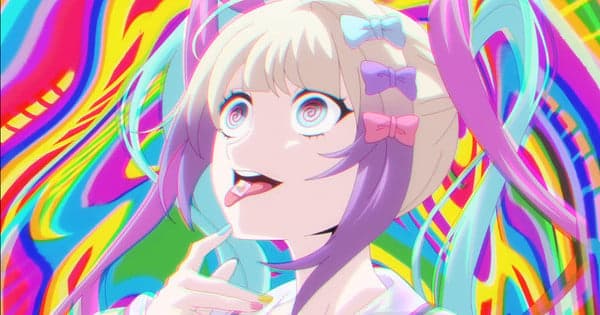
A sequel to the video game Needy Girl Overdose (Needy Streamer Overload due to the explicit and motivated drug reference in the series' title), this anime takes place after one of the game's possible endings, where the streamer OMGKawaiiAngel succeeds in her goal of gaining one million followers within her debut month. Within the opening moments of the first episode of the anime, we learn that KAngel now has 10 million followers and is the biggest internet personality in the world, with the show then exploring her influence, eventual downfall, and the personal destruction that must occur for someone to reach this level of fame. In exploring these themes, Needy Girl Overdose evokes the surrealism of Perfect Blue as well as the cynicism and ruminations on digital isolation of Serial Experiments: Lain, while also being mindful that the internet was and still is a place for marginalized, and especially queer, people to find the community that can help them live their best lives.
While the plot of Needy Girl Overdose is ostensibly about the lesbian polyclue/content creator clique Karamazov trying to surpass KAngel's status as the biggest streamer in the world, the show is far more interested in exploring these characters and how they're trying to transcend a society that wants to beat them down. Audience PoV character Kache starts the series with all the markers success — training for a job she's interested in, has a boyfriend, is hailed as cool and attractive by those around her — but quickly realizes that none of those status markers are actually bringing her joy and throws them out, literally in the case of her boyfriend, to pursue a life that's riskier but more rewarding for her. As for the Karamazov trio proper, Michica is dealing with the dual struggle of her pretty privilege, both isolating her and being a cornerstone of her identity; Nechika fights to hold onto a sliver of optimism while imperfect people define her life, and Lollipop is perpetually coming to terms with the people who inspired her to live her best life actually being deeply flawed human beings.
Then there's OMGKawaiiAngel/Ame, who, after enduring virtually every trauma abusive/neglectful parents can inflict on a child, decides to become a sin-eater for humanity and help other misanthropes who turn to the internet to flee reality as an obvious means of avoiding working through her own issues. Not only are the scenes that focus on Kangel/Ame the most visually inspired, drawing inspiration from cultural touchstones ranging from Evangelion to serial killer John Wayne Gacy, but they also contain the most overt sociopolitical commentary. Episode eleven features a kangaroo court segment that's nothing short of a perfect summation of how patriarchy in the digital age largely focuses on inspiring women to tear themselves down rather than more overtly oppress them.
More than anything, though, Needy Girl Overdose understands just how dehumanizing it can feel to try to live your best life and escape your inherited circumstances through the communities and infrastructure created by the internet. While there are no easy solutions to the issues explored in Needy Girl Overdose, or in society at large, god do I want to believe that groups of queer, woke, punk rock people successfully living their best lives means that the battle is already halfway won. For all of its cynicism and “themes over plot” style storytelling, Needy Girl Overdose makes me feel so validated in my choices to live a very weird, specific, and probably-too-online life, and this easily makes it one of the best anime of the season.
—Lucas DeRuyter
9. I Made Friends with the Second Prettiest Girl in My Class

While I Made Friends with the Second Prettiest Girl in My Class is a teen romance anime, but it's more than that. It's the story of two young people reaching a mental place where they can have a healthy relationship.
The first half of the show centers on Umi, the titular second-prettiest girl in class. Since she was young, Umi has been defined by her role as Yuu's best friend—the prettiest girl in class. The other girls in class tend to envy her for this position, but for Umi, it's been rather trying (outside of her actual friendship with Yuu). She's repeatedly treated as the second pick for boys (they always confess to Yuu and then try her once they have been rejected), and an endless stream of people befriend her with the true goal of getting closer to Yuu. She's treated as an obstacle or a token prize rather than her own person.
All this ties into Umi's friendship with Maki, the show's main character. For the first time since Yuu, she has a friend who sees her for who she is. Better still, they bond over all the nerdy stuff that Yuu isn't interested in. Umi keeps their relationship a secret, not because she's embarrassed to hang out and watch terrible shark movies with Maki, but because she doesn't want him to get involved with Yuu—she doesn't want Yuu to steal away yet another friend. With all this, Umi is left in a cycle of guilt, lying to one friend out of fear of losing another. It's deeply personal yet understandable—which is why Umi is such a likable character despite her flaws.
The back half of the anime, on the other hand, centers on Maki's issues. Basically, as a child of divorce, he is traumatized by the ephemeral nature of love. Every part of him wants to take the next step with Umi, but he's mature enough to realize that, until he gets past his insecurities, any relationship is doomed to failure. Thus, Maki is forced to confront not only his own feelings as a kid who wants his parents to be together and happy but also to come to terms with the kind of person his father is—and understand that, while love may not last forever, that doesn't mean it should be treated with inherent mistrust. It's an inner conflict likely to resonate with anyone whose parents went through a less-than-amicable divorce.
Lastly, tied into both arcs is Yuu herself. As a girl who always stood out for being blond-haired and blue-eyed in the nearly homogeneous country of Japan, she formed a deep attachment to the first person to treat her as a normal kid: Umi. However, since then, she has become used to being the center of attention. She's always on the receiving end of kindness and is therefore unable to see the issues Umi has been dealing with by simply being her friend. Her school life has also left her self—thinking that the things she enjoys are naturally things that everyone else would enjoy doing too.
It's only once she is directly confronted with the reality of Umi's life that Yuu starts to grow—to find a way to accept that Umi can have other friends and to become more aware of how her thoughtless actions—even kind ones—affect those around her. It's a solid character arc and one that's easy to empathize with.
In the end, with its solid cast and deep introspection, this show is great for anyone looking for an anime that mixes coming-of-age moments with teenage romance. The result truly is something more than the sum of its parts.
—Richard Eisenbeis
8. MARRIAGETOXIN

Finding a potential marriage partner is not always easy, and MARRIAGETOXIN exaggerates that matchmaking journey by setting it in the complicated world of supernatural assassins. As a fan of the source material, Studio Bones knocked it out of the park with this adaptation. The pacing was tight, the voice acting was distinct across the board, and this anime adaptation really made the most of color in a way the original manga couldn't. What makes MARRIAGETOXIN work so well is that while there are a lot of typical shounen trappings like a naïve yet skilled main character, weird power scaling, and very segmented arcs revolving around combat, what I love about MARRIAGETOXIN is just how much heart it has. Gero is a really endearing main character who genuinely wants to find love in such a complicated world, and like a lot of other shows that would have the potential love interests be there for the sake of filling a quota, MARRIAGETOXIN takes that extra step to give each distinct girl their own personality. If anything, the arcs where they get introduced are more about them than they are about Gero himself.
The series focuses more on the emotional character-building because the actual world-building can get very ridiculous under a critical lens. But the idea that the series is more about community building actually makes it feel really unique. This anime didn't get nearly as much attention as I would've liked, even though the reception seems to have been generally positive. I want to know which new potential characters get introduced in the future; I want to see what weird and out-of-the-ordinary powers the story pulls out of its butt; and I want to see the wholesome moments each arc ends on. This story is the perfect example of committing to a formula while having so much faith in the components that make it up. The answer might look the same every time, but it still feels satisfying to see how everything comes together—definitely a solid time to watch if you missed it this past season.
—Bolts
7. Akane-banashi

I'm a huge sap for stories about storytelling. Maybe it's the self-aggrandizing English major speaking within me, but I think words are incredible. Whether spoken or written, text can fling me backward in time, plop me into an utterly unfamiliar perspective, or conjure brand-new thoughts and ideas in my own brain. It is nothing short of miraculous.
At its best, Akane-banashi taps into the same feeling. Rakugo is an art that strips wordsmithing and storytelling down to its bare essentials. This gives the appearance of simplicity, but the restrictions that define the medium invite a kaleidoscope of complex subtleties. As such, Akane's journey into the professional rakugo world functions brilliantly as a “tutorial” for the audience. The series settles into a comfortable structure: Akane lacks something for an upcoming performance, a fellow rakugoka directly or indirectly guides her creative hand, she learns a new nuance that improves her craft, and we gain an additional layer of understanding. To me, this is edutainment at its finest.
Akane-banashi, however, is not a teaching tool. It's a shonen story about rakugo. That attention-catching quirk is an understandably huge part of its appeal. There's a quintessential amusement in seeing the genre's tropes—action-heavy framing, training arcs, tournaments, live commentary from side characters, etc.—applied to the art of sitting on a cushion and spinning a yarn. In fact, a weakness of the anime is that it's a bit too eager to lean into these shonen accouterments. We don't need to see that many speed lines behind the stage, and sometimes the bombast butts against the aforementioned subtlety found in the heart of rakugo. I would rather see the series focus on the smaller minutiae in a quieter way.
Thankfully, Akane-banashi does indeed fulfill that request more often than not. The series understands that the human element is paramount when it comes to stories about stories. Akane herself is wonderful, plucky, and shrewd, with a strong intuition for incorporating new techniques and insights into her craft. While her motivation is simple on the surface—a spin on the classic “avenging your dad” schtick—I like how it almost takes a backseat to her genuine passion for rakugo. She goes through various trials and tribulations to become a better performer. It isn't just a means to an end, and it makes her face-to-face confrontation with Issho Arakawa deliciously complex. How does her love for her father compare against her love for an art form in danger of dissipating entirely?
In other words, Akane-banashi takes on the twists and contours of a classic rakugo story. These aren't narratives that race from A to B. They leisurely sketch their characters and settings. They invest heavily in silly wordplay, sometimes to the point of diminishing returns. They exist in a quantum state between the historical record and our modern quotidian experiences. They know when to get serious. They know when to tug at your heartstrings. They know when to crack a joke. And they know how to test the mettle of the people who perform them. Rakugo is mentally, physically, and emotionally exhausting, and each rakugoka sacrifices a lot for what seems like frivolity. There is no good reason to do it, except for the fact that it's the only thing worth doing for people like Akane.
—Sylvia Jones
6. Botan Kamiina Fully Blossoms When Drunk

Sometimes, even when you know an anime is going to be up your alley, you can't know how much. If you know me, you know my love of anime women who love drinking and possibly each other is no secret. I'm a big fan of Takunomi., so if Botan Kamiina Fully Blossoms When Drunk was to be another instance of gals being drinking pals, I was already here for it once the bar clock struck five. And as perfectly cool as the base conceit was, the anime's presence here on this list makes clear that what was delivered was far beyond that humble synopsis.
Botan Kamiina could have gone a lot of places. In moments, its direction calls to mind Bocchi the Rock!, Laid-Back Camp, or even Encouragement of Climb—intimate peer-ins on incidental character lives as they interface with a given activity and bare themselves through it. And like those, Botan Kamiina does not necessarily feel the need to have those selves explicitly articulated. It gets by on the furtive glances and the intents that remain unspoken until it may be too late. Because one of the main feelings powering Botan Kamiina (both the show itself and its title character, among all the other characters) is longing. It's a show nominally revolving around imbibing alcohol—of course, it's going to function with these girls bottling up their feelings until a little liquid courage pushes them over the edge.
Not to get too pretentious with this sell, but that sense of the unspoken really is the intangible mixer that makes Botan Kamiina so potent. Everything gets in on this action, from characters making innocuous statements or cutting off at the ends of episodes in ways that are loaded with emotional intent, to the gorgeous, unique ending sequences that paint out the tragic but undescribed ways these girls have failed to score in the past. The alcoholic articulation of everything truly works a complement here, as there's a sense of foggy, mixed-up memories of what Botan or Ibuki might have meant in their aside remarks to each other. Until, of course, the show makes clear, with nudging from other characters, that no, this was real. That, too, of course, requires a little imbibing to grease the gears as well.
The characters' motivations can be as uncertain as anybody's when they're a couple of drinks down, and the show's visual approach enhances that haze. The story goes that the production of the Botan Kamiina anime let the boarders, directors, and others on staff run wild in their handling of the animation, without supervision or correction. The results are a veritable film festival of interstitial interpretations that blend into a tipsy tapestry of styles. Yet somehow, the marriage of confident character presentation and storytelling means the squiggly, sometimes SHAFT-ish scenes of episode 3 still feel right at home alongside the fourth episode, which is far more, uh, focused…on feet, a lot of the time. It's fair, Botan Kamiina is simply one more reinforcement of the point that to create great art, you have to be some kind of pervert.
And I do feel confident in referring to the funny, depressed lesbian drinking cartoon as "great art." It's an exploration of human emotional journeys from a very grounded, benign perspective rendered with beauty you can feel if you've altered your perception a little bit. It communicates Ibuki's feelings of shame at her former peers in a painfully relatable way. It introduces the new exchange student, Chin-Lan, and immediately dunks on her for being a third wheel. It features Gujo as the cool, smoking, drinking senpai, only to make it clear she's a girlfumbling girlfailure, which somehow makes her even more appreciably relatable. I couldn't have known what Botan Kamiina Fully Blossoms When Drunk would be until I watched it, and for as much as I could compare it to other things I'd seen before, it proved itself by being utterly unlike anything else.
—Christopher Farris
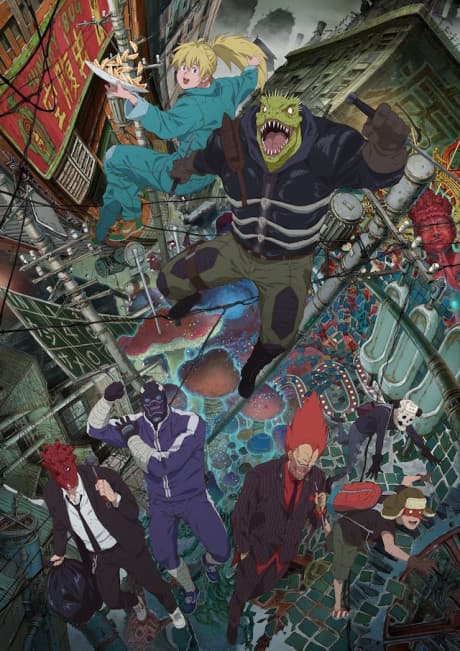
5. Dorohedoro Season 2

Six years between seasons is a long time, but I have to think that maybe this was the best choice for Dorohedoro. The first season, while overall a lively adaptation of Q Hayashida's beloved comic-horror manga, suffered significantly from MAPPA's choice to animate it in 3D rather than hand-drawn 2D. The result was a rollicking adventure held back by stiff motion that failed to bring the gory action scenes fully to life.
Computer animation has come a long way since then, and the second season of Dorohedoro does much better by the manga's grungy, graphic visual style. The shifts between 2D and 3D are nearly seamless, the action is fluid, and blood and viscera splashing across the screen feel much more organic. I had to make a household rule that we weren't allowed to watch it during dinner. If you are here for the guts and fights but were disappointed by the first season, I implore you to give Dorohedoro's second season a try.
But maybe you're not here just to see all the different ways organs can be splayed outside the body. I know I wasn't; in fact, considering I'm very much not a fan of graphic violence, the story and characters of Dorohedoro better be something truly special to keep me watching. And truly, they are. We get to spend plenty of time with the weirdos we already know and love: Noi and Shin, Caiman and Nikaido, Aikawa and Ebisu, En and Kikurage, and several other secondary characters. They're all here, joyfully weird and bouncing off each other in new ways as the two primary interest groups crash together and intertwine. The introduction of the Cross-Eyes Gang, not as an antagonistic force but as a group of characters in their own right, brings some delightful additions to the cast, including the sweetheart Natsuki, whom I would die for, and the charismatic Aikawa.
I will say, though, that if you're approaching Dorohedoro as a mystery, you're doing yourself a disservice. As an anime-only fan, I've given up on staying ahead of the plot and figuring out who Caiman is. Instead, I've learned to lean back and let the story wash over me. The world is awash in strange imagery and foreshadowing that only makes sense in retrospect. Every twist–and there have been many–has asked more questions than it answered, leaving me confused but fascinated. I can only hope I don't have to wait another six years to see the plot resolve.
—Caitlin Moore
4. Kirio Fan Club

Real teenage girls are not the sweet and sultry sexpots that so many anime make them out to be. They're weird, cringe, and often kind of gross! Kirio Fan Club absolutely nails the high school girl experience with the instantly relatable Aimi and Nami—two friends who love making poop jokes, writing silly songs, and creating convoluted thought experiments centering around their classmate, Kirio—a boy whose identity is initially so unimportant to this story of female friendship that his whole face is never shown. As the story deepens, it turns out that all of the classmates in Aimi and Nami's orbits have inner lives that feel equally earnest and true. Kirio Fan Club purports to be about off-putting misfits while succeeding at being the most sincere and relatable story available this spring.
What if the gayest thing two girls could do together was crush on a male classmate? It's a very different take on the romantic comedy genre: Aimi doesn't know it, but she's the love interest in this story. Kirio Fan Club reveals Nami's crush on Aimi straight from episode one, and from there, the love story takes on a very different dimension beneath the Kirio-centric surface. As Aimi and Nami chat at their favorite hangouts about their most bombastic and disgusting expressions of Kirio love (would they keep his toenails in a jar? Of course: only the finest of jars!), the focus of the story isn't Kirio himself—it never was—it's on Aimi and Nami's friendship, and whether it will blossom into something more or wither the moment Aimi grows a spine to finally confess to Kirio. From Kirio's perspective, too, Aimi and Nami's friendship is the most beautiful part of this story, something he covets for himself. And as we learn more about Kirio and his circumstances, the girls' rare closeness even becomes painful for him. From Nami's unrequited love to Kirio's pining for a friend he can no longer see, the bittersweet edges of this show sharpen its silliest (often scatological) moments to create a complex, humanizing whole. How can one singular anime contain the laugh-out-loud “Licky Love Song” plus a sharp-eyed look at depression and suicidal ideation—and somehow merge both components perfectly?
Kirio Fan Club was the anime I looked forward to the most each week. This story's emotional twists and turns would be a lot to absorb in one sitting, but I would have watched it all at once in a heartbeat. Its combination of raw emotional pull and perfect comedic timing is so rare that it's difficult to classify. What sets it apart the most: its cast. The characters of Kirio Fan Club are all misfits, and they all have the capacity to be funny, but nobody is ever the butt of the joke in a mean way. When they're not cracking wise, each member of the cast is shown to have a rich inner life that elevates this story from a silly slice of life to a heartfelt patchwork that left me reeling. Add in an OP and ED I just can't skip, it's a masterpiece.
—Lauren Orsini
3. Daemons of the Shadow Realm

Between Fullmetal Alchemist, her version of The Heroic Legend of Arslân, and her magnum opus, Silver Spoon, Hiromu Arakawa has rarely missed, and this series is no exception. Much like Fullmetal and Arslan, this show blends fantasy with elements from real-world cultures, but whereas those stories took place in their own unique worlds, Daemons of the Shadow Realm pulls a bit of a hat trick. At first, we follow our protagonist Yuru through what seems to be a rural fantasy setting. Still, we soon discover he's living in modern-day Japan, and that the remote mountain life he's in has been intentionally manufactured. In addition to being a great twist, it also makes for a strong hook for a mystery, allowing Arakawa to craft a solid web of intrigue among the members of Higashi Village who hid the existence of the outside world from Yuru his whole life. With the mysterious Kagemori clan willing to go to any lengths to oppose them, it's never certain who Yuru can trust.
All those mysteries are layered on top of an equally strong production, thanks to Masahiro Andō and his team at BONES, who do a great job of delivering high-quality action sequences and showcasing the hallmarks of a good thriller, with both sides equally well executed. While the show does have a few bits of tonal whiplash in how often it's willing to cap off moments of extreme violence or looming tension with Arakawa's trademark wacky humor, it generally balances those moods pretty well. It avoids leaning too far into either direction just enough to stay consistently entertaining. Much like with Arakawa's most famous work though, what helps to tie all this together is Yuru's sibling bond with his estranged twin Yuru, and while that bond takes a different shape than the one we saw between the Elric Brothers in Fullmetal Alchemist, it's still just as compelling, which makes the two of them easy to root for as they try to navigate their way through dealing with all the adults looking to take advantage of them. Neither Arakawa nor BONES has lost a step when it comes to creating some quality television. Whether you're in this show for the action or the mysteries, there's plenty here to offer one of the best anime experiences of the season.
—Jairus Taylor
2. Nippon Sangoku

In a season as loaded as we all knew Spring 2026 was, it's hard to imagine that something could grab its audience by the collar as fast, hard, and most of all, unexpectedly as Nippon Sangoku has proven to. Indeed, you'd be forgiven for admitting this show has been nowhere near your radar up until now. Anecdotally, everyone I know who's fallen in love with the show (including myself) had no idea just how hard it knew ball until it actually started airing. At which point, they were promptly blown away and started singing its praises at every opportunity. We here at ANN, in particular, have done our part in correcting this awareness issue by talking it up quite a bit in the weeks since, especially on the ANN Aftershow.
Following years of disaster and decline, the island we know as Japan has technologically regressed and been split into three territories in the wartorn world of Nippon Sangoku. Our story focuses on Aoteru Misumi—a young man (still a teenager at the beginning of the series) who is interested in agriculture. He dreams of a unified Japan, and his wife believes he has the speaking and strategic abilities to make it happen. And following a personal tragedy that I won't get too specific about since it really is the kind of scene that I think hits hardest if you don't see it coming, Aoteru finally has the motivation he needs to actively pursue that goal.
Suffice to say, as early as the first episode, you know you're in for something raw. And things only ramp up from there. Political intrigue, agriculture, betrayal, and some of the most over-the-top violence and gore we've had this season—a little bit of something for everyone. Meanwhile, on the more technical side of things, there's no denying that this is just a beautifully crafted anime. Visionary direction by Kazuaki Terasawa (who did an interview with ANN here!), brilliantly stylized visuals and animation that look unlike anything else, and a beautiful soundtrack by the amazingly talented Kevin Penkin—need I go on?
That this show is on Amazon of all platforms—a platform whose interest in anime feels far more limited than its competitors—is nothing short of wild. Nippon Sangoku is bursting at the seams with artistry. This was easily the biggest sleeper hit of the season, and you're doing yourself a disservice by not checking it out.
—Kennedy
1. Witch Hat Atelier

The basic principles of modern animation began to take shape in the early decades of the 19th century, when inventions like the zoetrope and the phénakisticope used sequential images painted on paper wheels and metal cylinders to create looping vignettes of moving characters. These days, the technology is so rudimentary that these little baubles might as well be artifacts from the Paleolithic Era. Still, you have to remember that actual photography was being invented more or less contemporaneously with these proto-cartoons. Live-action film would not arrive for another sixty years or so. For the people of the time, seeing these tiny characters and scenes spring to life was a truly dazzling spectacle. It must have seemed like some magic spell was being cast right before their very eyes.
What makes Witch Hat Atelier such a wonderful testament to the magic of animation is not simply the fact that nearly every episode is full to bursting with BUG FILMS' lush, exemplary adaptation of the positively decadent artwork of Kamome Shirahama's original manga. Not only do the show's incredible production values allow a team of talented animators working at the peak of their abilities to show off for the audience, but they also complement the underlying themes of its heroine's journey into her world's complex system of magical practice and education. As Coco discovers, thanks to the tutelage of Qifrey and the support of peers like Agott and Richeh, magic is not simply a limitless wellspring of reality-altering energy that talented heroes can summon with the flick of a wand and a few pretty words. To draw magical runes and harness the natural elements required to make magic work, one must work tirelessly to master a host of disciplines and develop one's own personal style. While the effects of magic are powerful and dangerous enough to stoke clandestine wars and demand society's strict adherence to cautious regulations, the process of magic is a simple and personal one. It is art.
Countless books and shows have tried to ape the success of franchises like Harry Potter by simply recycling the same old tropes of spells, potions, and the minutiae of magical ranking and statistics systems. The genius of Witch Hat Atelier lies in how it uses the allegorical nature of its world-building and magic systems to craft a genuinely vivid and emotional story that feels fresh and meticulously crafted. Coco is an endearing heroine precisely because she has not been gifted with unstoppable powers and surrounded by mewling sycophants. She is, instead, like so many of us, someone who has seen the often beautiful and sometimes terrifying power of creation that every single human possesses. There is the surface-level plot of saving her frozen mother, sure, but Coco's drive to master her own potential obviously comes from a deeper passion for growth and discovery. It's that same passion that drives every single artist, technician, musician, and performer who works to bring Witch Hat Atelier to life. It was nearly two hundred years ago that this medium was created, and I'm sure that even then, there were boys and girls looking through the slots of those zoetropes who became inspired to put their own pens to paper and will their dreams into being.
—James Beckett
Disclosure: Kadokawa World Entertainment (KWE), a wholly owned subsidiary of Kadokawa Corporation, is the majority owner of Anime News Network, LLC. One or more of the companies mentioned in this article are part of the Kadokawa Group of Companies.
The views and opinions expressed in this article are solely those of the author(s) and do not necessarily represent the views of Anime News Network, its employees, owners, or sponsors.