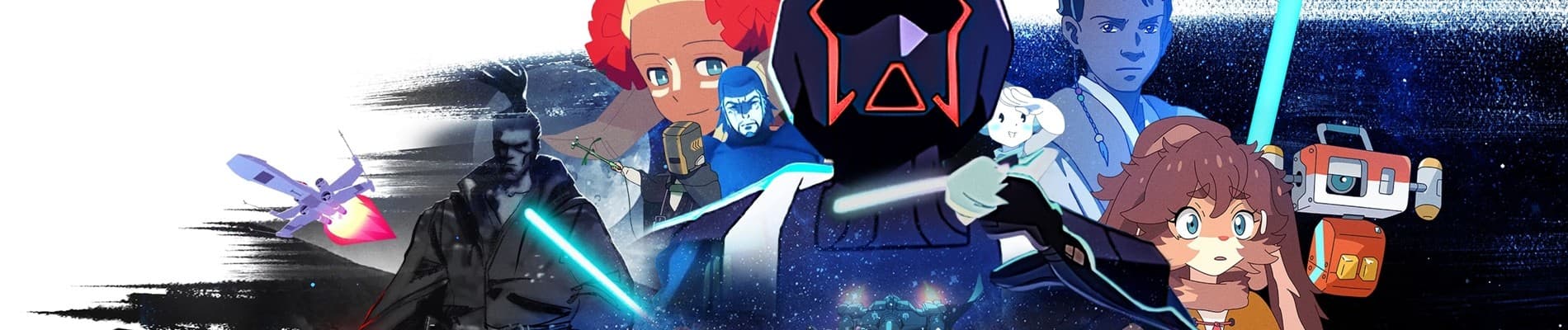
Over the years Star Wars has become central in mainstream media, with people being born long after the release of the first movies falling in love with the stories of a galaxy far far away. However, as the Star Wars title is passed down from studio to studio, it becomes inevitable that the eventual recipe becomes overdone. With some people being dismayed at the newest Force Awakens trilogy. However, this is where Lucasfilm and Disney pulled the biggest brain move ever. Giving anime studios in Japan the name of Star Wars and free reign to create nine stunning short stories set in the greater Star Wars Universe. And the results were astounding from start to finish.
Plot
Since Visions was an anthology of nine separate stories, it wouldn't make sense to judge them by their continuity nor their connection to established canon as it was made clear that these aren't canon stories but rather completely from the studios' imaginations. While not all of the stories felt fully fleshed out, they all provided at the very least enough to make me feel instantly immersed. The best exemplars of these would be Lop and Ocho and The Village Bride. Their worlds felt immersive and vast, with a smooth integration of Star Wars' cyberpunk attitude even in rural or traditional areas like those settings. On top of that, some episodes kept signature Star Wars themes and canons, the best example of this being Akakiri, where you can trace the main Jedi's descent to the Dark Side by following the lines of the canonically established Sith Code. Even when they did deviate from Star Wars canon, they do so in an imaginative way, like the blades of the lightsaber turning color according to the owner instead of the crystal's natural color in The Ninth Jedi.
Animation
Naturally with each anime studio comes its own unique animating styles. Despite this, each episode still kept some signature Star Wars elements, like the classic swipe transition. I'll quickly go over the anime studios and give a few thoughts on each of them
Kamikaze Douga - The Duel
This one's my favorite one of them, pseudo-3d style with a black and white coloring make the animations seem like something out of a samurai movie. The fluidity of the fight between the Ronin and the Sith make the world seem even more realistic. Fantastic opening for the anthology
Studio Colorido - Tatooine Rhapsody
This one's vibrant and colorful, bringing an interesting twist to the traditional characters. The chibi artstyle certainly made Jabba and Boba feel a bit cartoonish, but they retained Boba's level of badassness while also showing a lighthearted side of him bopping to the music. A very unique twist on classic characters
Studio Trigger - The Twins & The Elder
Trigger's back at it once again with their signature fight animations, there was a clear difference between the animations in the two episodes they did. The Twins had powerful color contrasts to differentiate between siblings Am and Karre, while The Elder had moody shading to pose ominousness at the ancient Sith.
Kinema Citrus - The Village Bride
This one was as colorful as it was heavy. The vast beautifulness of the world in the episode was displayed with vibrance as a clear contrast was made with the darkened technological conquerors of the bandits and their battle droids.
Production I.G. - The Ninth Jedi
The central location of the fight gave this anime studio lots of room to play with lighting, The ominous turn of the camera as the sith reveal their identities and the vibrant blades of their lightsabers make for a memorable fight.
Science SARU - T0-B1 & Akakiri
These two are perhaps the biggest opposites in the anthology made by the same studio, Tobi was a clever homage to the classic AstroBoy, with his signature eyes, the remarkably similar professor, and the idea that he can be something greater. The colorful solidness of technology contrasted with the natural contours of nature make for an interesting episode. Akakiri, on the other hand, played with colors and lighting to a whole new level. The constant visions as the misguided jedi fights both his brain and his enemies in a trance. And the final moments where the Sith offers him apprenticeship, the lighting mixed with the heavy taiko drums make for a hair-raising experience. Hats absolutely off
Geno Studio - Lop and Ocho
This studio went really creative fusing Star Wars' cyberpunk with a traditional Japanese city, the bustling city compared with the tranquility of the clan home make for an interesting display. Not only to mention the fluidity of the animal-like Lop contrasted with the sternness of Ocho, it makes the story even more immersive as we see the sisters attempt to sort out their differences.
Music
Just like how each studio brought a different style to their episodes, each composer brought their own twist to the classic Star Wars orchestra. The fights still feature the excellent orchestration, while the more natural aspects give smooth flowing of strings and accentuating horns. Some of the best examples of this is in The Village Bride. Composed by none other than Kevin Penkin, the scenes in this episode's natural world are heightened by Penkin's signature use of vocals, giving the natural world of this planet a vibe that resembles that of the natural ecosystems of The Abyss from Made In Abyss. Absolutely beautiful.
Overall, I loved the uniqueness of each story in the anthology. Since they're all relegated to a single episode, each one felt like they were conclusive, and in cases where we were unsure of the main characters' fates, it gives an ominous vibe of uncertainly while sounding conclusive in terms of the events of the episode. A feeling that only Star Wars can pull off. Star Wars made the right choice giving its title and free reign to these studios, because they definitely outdid themselves.
32 out of 37 users liked this review