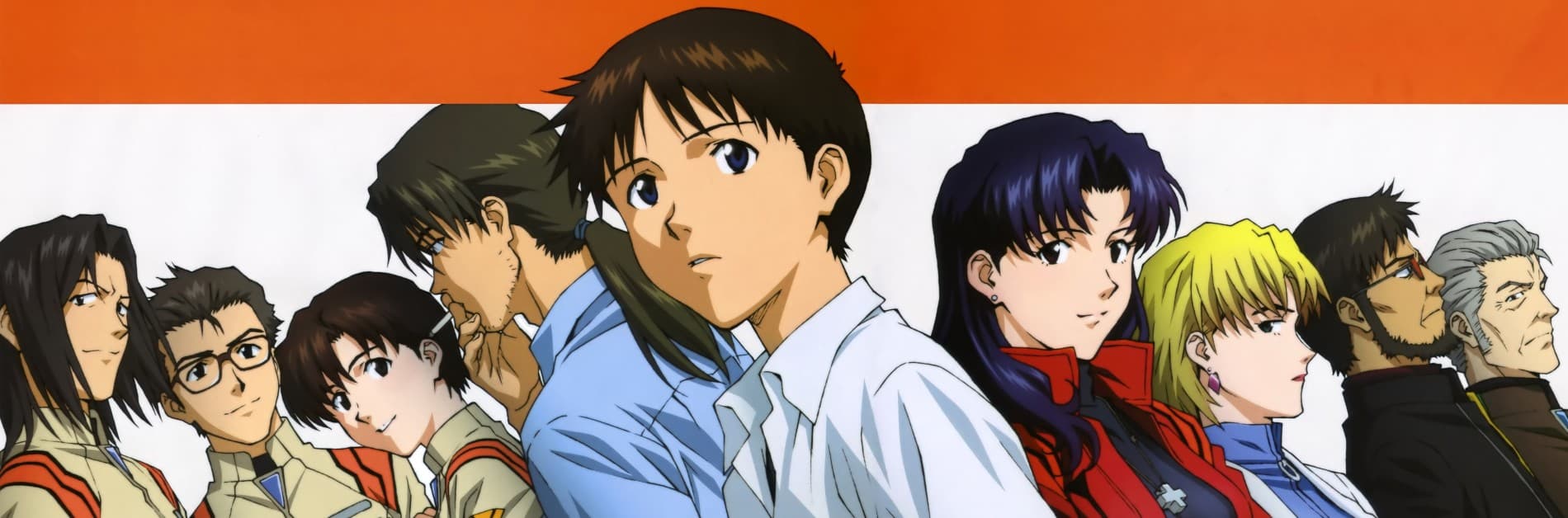



Sequels can be what make or break a franchise; they can be what cement a series as great or they can show that the success of the first entry was a fluke. If the first entry of a new saga plays it safe, it's up to the next installment to assure fans that they won't be getting the exact same thing twice (looking at you, The Force Awakens v. The Last Jedi). This is the task that 2009's Evangelion: 2.0 You Can (Not) Advance found itself straddled with. As I detailed in my review, its predecessor, Evangelion: 1.0 You Are (Not) Alone rarely deviated from the original Neon Genesis Evangelion. This was ultimately fine by me, as I enjoyed the first few episodes of Evangelion enough to not mind watching them again. Plus, with a new ending scene, I was confident in director Hideaki Anno's ability to deliver us a fresh, exciting product. And after watching the movie, I can assure you all that the rebuilds will be an entirely different beast from the television show.
Though, that needn't mean that said beast is necessarily a good one. After all, one of my friends claims that 1.0 is their favorite rebuild movie expressly because it's virtually the same as the original. With that in mind, what do I think of the second installment of the rebuild tetralogy? Do the differences work for the story they're trying to tell or do they bog down the product?
I don't need to wait until the end of this review to collect my thoughts. In the time between finishing the film and sitting down to write this review, I already knew that I absolutely loved this movie.
In Evangelion: 2.0 You Can (Not) Advance, we continue following Shinji, Rei, and the rest of NERV as they keep up the tireless fight against the Angels. Things are a bit different this time around as new characters are thrown into the mix: the fiery Asuka, the smooth Kaji, and the mysterious Mari. Shinji and his colleagues find themselves fighting increasingly deadly angels all the while Shinji continues to seek his father's approval.
And that's as much as I can say without giving too much away in the synopsis, because besides fighting the Angels, there isn't an overarching plot moving the movie forward. Fortunately, the movie doesn't feel disjointed. This can be attributed to the characters and their relationships to one another being focused on. Each battle with angels either solidifies or furthers the characters' motivations and/or personalities. With this, while the plot could seem disjointed on paper, but in practice, while watching the movie, everything seamlessly blends together.
And speaking of battles, there are a lot of them this time around. 1.0 featured three angel battles while 2.0 features five. Even the shorter ones are beautifully, breath-snatchingly animated. Some of the fights are as tense as before, if not moreso. The shorter ones are a lot less tense, but what can I say, they're damn cool and I appreciate that they're in the movie. Deeper meanings or no, I'm not going to pretend I don't enjoy the giant robots beating the shit out of monsters and other giant robots. Of course, Evangelion even at its most monster-of-the-week, is more than that. Thus, a legitimate concern is that a whopping five battles in under two hours is too much. Honestly, this is another example of sounding like something bad on paper but actually ending up being brilliant in practice. Believe it or not, while watching the movie, I actually thought there wasn't a lot of action compared to the first movie. This can partially be attributed to the length of some of the conflicts. Mari's opening fight against The Third Angel and Asuka's fight against the Seventh Angel, both towards the beginning of the film, each clock in at five minutes, tops. A good portion of the movie, then, is filled with "downtime."

2.0 seems to feature a lot more "downtime" than its predecessor, showing the pilots partaking in more leisurely activities such as cooking, hanging around the classroom, and going on a trip to a maritime preservation facility. On first glance, it might seem like this makes for a much lighter, happier movie. I'd agree with this sentiment to an extent. 2.0 can be much lighter and funnier than 1.0 but it can also be more cripplingly dark. As I discussed, 1.0 was good at fostering a stable, somber tone throughout its run. 2.0 is wildly unstable which makes for a more engaging watch. The emphasis on "downtime" makes it so tension is released, we're less on edge, our guards are down. Things actually start to look up for Shinji and the gang. Gendo seems to actually be noticing his son, Asuka's prickliness is fading, Rei's coming out of her shell, and there's a big party on the way. We think everything might work out when

Our hearts are stomped on by the reality of the cruel world that the characters find themselves in. Towards the end of the film, shit hits the fan and it just keeps on hitting it, fecal matter flying every which way about the room. I was worried about the more comical aspects at first, fearing that it would take away from the tension. Little did I know that this would be a spectacularly great thing.
“Downtime” also helps with an aspect of the film I absolutely adore: the characters. Almost everyone seems to have a moment here, from learning about Misato's past to getting another side of Gendo. We start to see Shinji coming into his own more, becoming more confident in his abilities and trusting of others. He still seeks approval, but he's much less of a broken bird. When he runs away again at the film's climax, it's not due to being afraid of his own lack of abilities, it's because he's fed up at being used, believing the trust he put in others has been misplaced. In opening up, he also opens himself up to his hidden aggression, at times seeming as angry as the cyborg he pilots. The entire English voice cast, courtesy of Funimation, is terrific, but whenever Spike Spencer screams as Shinji, I get goosebumps. Rei, as stated before, opens up a fair bit and repays Shinji's kindness towards her by trying to help him with his own personal problems. Then there's Asuka Shikinami Langley.
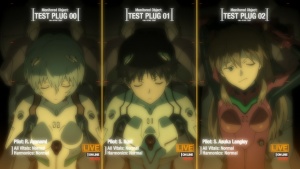
I think it's a testament to this movie's handling of characterization that I genuinely felt something for Asuka. From the brief quip I made at her expense during my last review, you’d probably guess that I dislike Asuka. You'd actually be incorrect; I loathe Asuka with every fiber of my being. A large part of this can be attributed to me disliking the prickly and abusive "tsundere" archetypes in general, but Asuka in particular can be pretty nasty in how she treats Shinji. 2.0 doesn't pull any punches with Asuka's introduction; she immediately goes on about how much better she is than others, states that she doesn't need to work with anyone, calls the other Evangelion “outdated test models,” etc. Even during her moment of vulnerability, she's sure to give Shinji the moniker "Stupid Shinji." Many groans were uttered at the sight of Asuka. But things begin to change. The insecure person beneath her facade seems to show herself more than I recall; it's obvious when she plainly states that the cockpit of the Evangelion is the only place she feels she belongs. Later in the movie, Asuka's humanity is showcased further when she offers to pilot a new Evangelion instead of Rei partly to allow her to attend a party. This allows me to sympathise with her now more than I ever could before; she's brash and a brat, but not the relentless bully that she was before. This is what allowed her misfortune to be more impactful here than it was in End of Evangelion. She finds herself hurt, punished for finally putting someone else first. It's truly tragic and I genuinely felt bad at the prospect of her dying. In End of Evangelion, her being torn apart by the Mass Production Evangelions didn't elicit a reaction besides horror at the gore. In the same movie, Asuka being choked by Shinji didn't garner much pity, either. This, though, was powerful. This was heartbreaking and made me come around to (slightly) warming up towards Asuka.
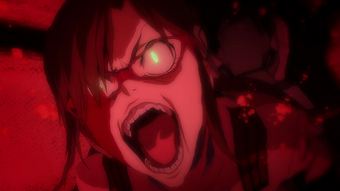
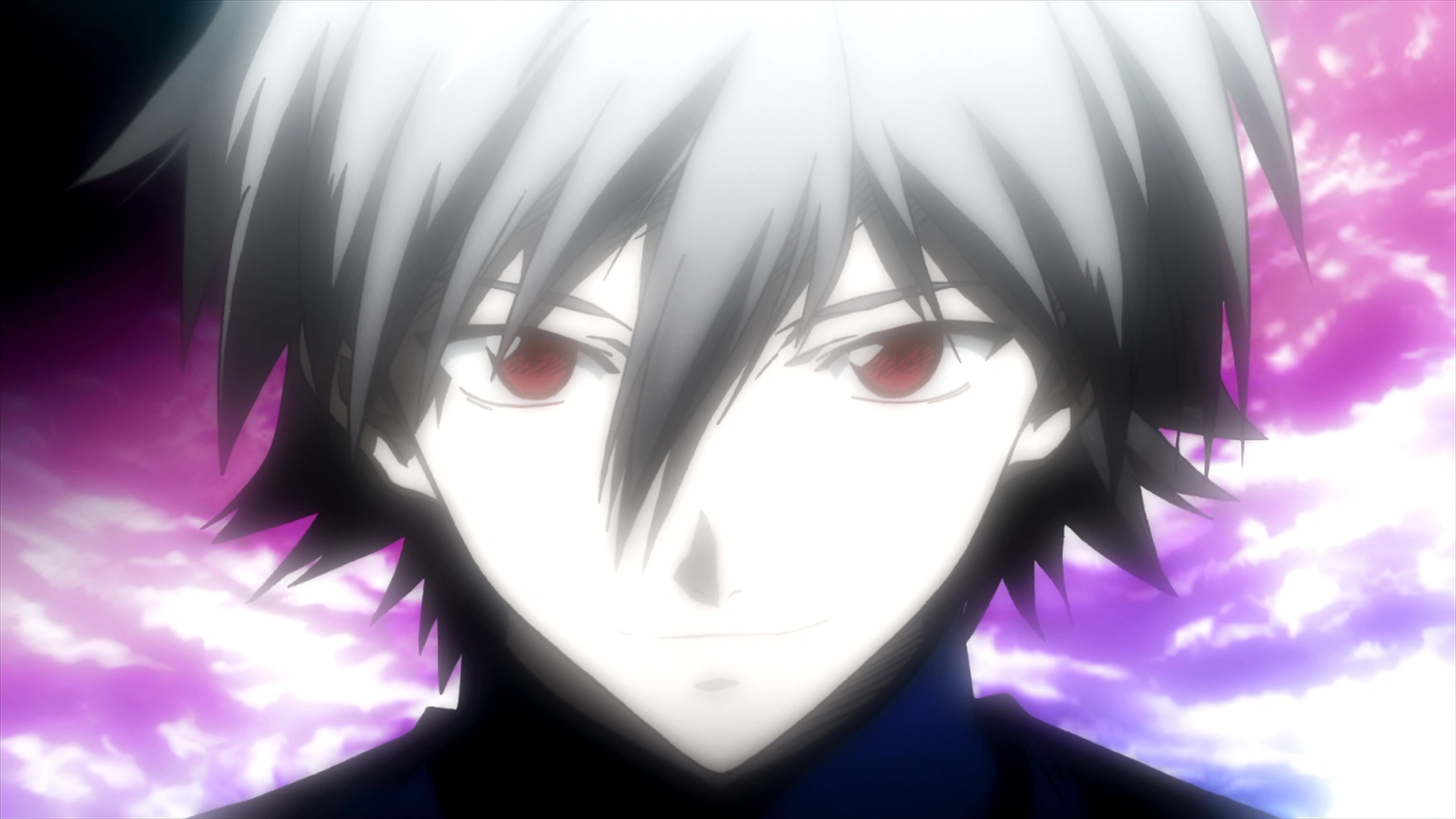
Still, that isn't to say I enjoyed the use of all characters. Kaji was inoffensive enough, but didn't amount to much. Mari's role largely amounted to showing how the events of the movie were slightly different. She doesn't add much to the story besides having a few cool action scenes which is more than I can say for Kaworu. For the past few movies, Kaworu's role has been simply being cryptic. His role in the last movie was to remind viewers that they weren't just watching a souped-up recap movie. Especially with him appearing on the poster two times now, you'd think that he'd do something, but he doesn't have so much as a conversation with another character. His appearances have been cameos, but with him touching down on Earth and essentially stealing the ending, he's at least guaranteed to be more prominent in the next movie. Right? Please?
I don't really have anything new to say in the art or music department. Things still look amazing, the music, whether calm or hype, is awesome. Have I mentioned that I like Decisive Battle?
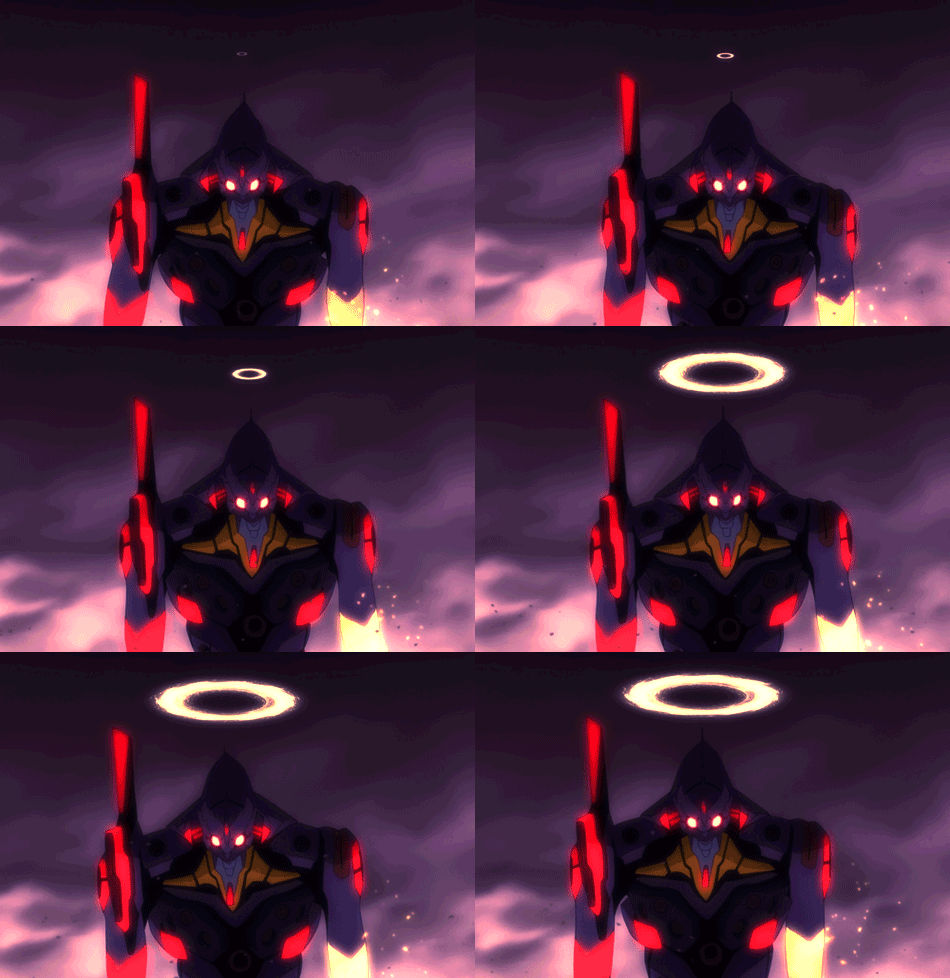
I don't want to say the ending "made" the movie since I liked the preceding elements well enough, but, Holy Hell, the ending was phenomenal. From Shinji deciding to retire at the worst possible moment, to Rei and Mari launching an ultimately futile attach against the angel (Mari isn't in the film much, but when she's in, she's in commandeering any scene she's in as her own, just like Asuka's Unit 02 which she somehow rocks better than Asuka herself), to Shinji asserting that he is the Evangelion Unit 01 pilot, to Shinji and an Ascended Unit 01 waging battle against Zeruel and saving Rei, this ending was sweet, this ending was tense, this ending was awesome, this ending was insane. I loved every moment of it and it ended on a hell of a cliffhanger. The intercharacter relations throughout the film pay off spectacularly in an ending that carried a lot of emotional weight for me.
So that's what you can get out of the movie in-and-of-itself, but what about in relation to the original Neon Genesis Evangelion?
Straight out the gate, we're treated to a completely new scenario featuring newcomer Mari Makinami Illustrious, as if apologizing to the viewers that 1.0 stuck so closely to the original Evangelion. I'm pretty sure that's the actual, intended function of the scene because we cut to Shinji immediately after, with Mari not seen again for most of the movie. The first bit of the movie proceeds like the show, though with an increasing amount of changes. Towards the end, things have changed significantly as Asuka is the one piloting the ill-fated Unit 03 instead of Toji. The ending, while borrowing aspects from various episodes such as episode 23 and episode 19, is almost completely a new creation of the movie.
The ending marks a distinct turning point in the Rebuild where veterans can point and distinctly say that this is the point in which it comes into its own as an entity separate from the previous continuity. Tragedy is averted as Shinji, against all odds, manages to save Rei while in the previous continuity, Rei would have perished. The Evangelion ascends to a seemingly God-like state, making it seem less grounded in tangible rules? Mari states that "things just work out for [Shinji]." Even as a fan of the movie, this rubbed me the wrong way. If nothing else. Shinji has always been a supremely unlucky person who finds that absolutely nothing goes the way he wants it to in the end. But this is a new continuity, a seemingly more hopeful one, A continuity in which, even if they must go through horrible trials to get there, there's a light at the end of the tunnel. To some, this might come across as cheap, but it comes across as refreshing, new take on Evangelion. I'm excited to see where they take this new direction.

It's funny that I praise the characterization when characterization is apparently one of the most lauded aspects of the Rebuild continuity. To many, the characters seem more shallow than they do in the show. I think this can be at least partially attributed to the legitimate criticism that the movie runs under the assumption of assumed knowledge. For example, people state that Misato's backstory wasn't fleshed out when, at first glance, I thought her backstory was fleshed out enough. But, thinking about it, considering that I was leisurely reading the Evangelion Wiki a few days ago, it's likely that I just filled in the blanks. Similarly, a lot of Asuka's attitude makes more sense if you know the deal with her mother, which is something expanded on in the show. There's also Rei speaking about how there will be more of her; something that only makes sense if you've seen the show.
Besides backstories, prior knowledge helps other aspects of the film. This movie seemingly doesn't feature the death of any major character, but if you watched Evangelion you'd come to expect characters to die, thus the movie generates tension through nothing other than its relation to the source material. If I'm being perfectly honest, it's possible that my feelings for these characters were only made possible for following them for 24+ episodes prior.

It's very possible Anno failed his mission in making these films accessible to both newcomers and veterans. As a veteran, I loved this film and I'm sure there are many things newcomers can get out of it, though my perception is ultimately skewed.
I was afraid that I'd have to write a review criticizing the new direction. If I do have to write that review, it's not for 2.0. You Can (Not) Advance emerged from the shadow of its big brother, Neon Genesis Evangelion and is ultimately better for it, taking its continuity in exciting, uncharted territory. This movie exceeded my expectations and once again, I am very excited to see what the next movie has in store. At the end of the film, Kaworu, almost threateningly, tells Shinji that he'll show him true happiness. I hope he has some in store for me, as well.
9.2/10
A-
67.5 out of 72 users liked this review
